
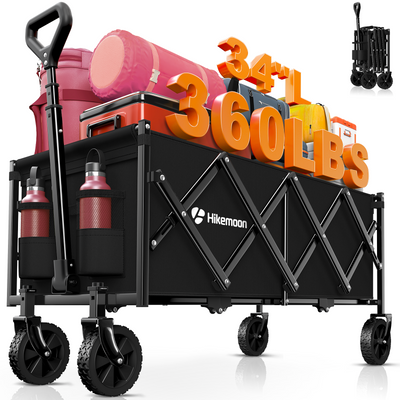
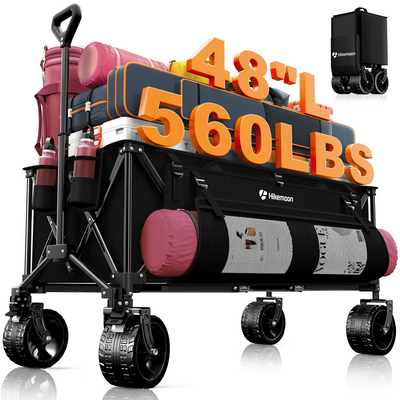
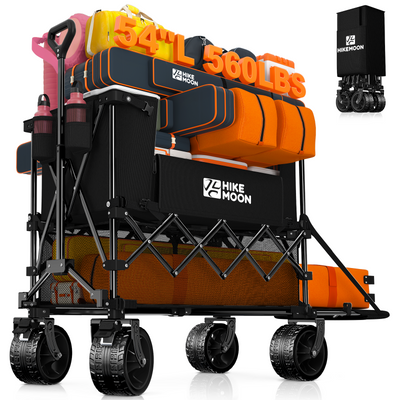
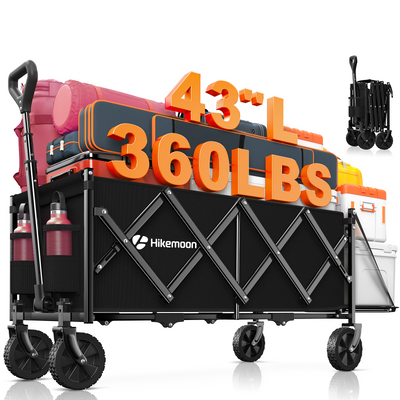
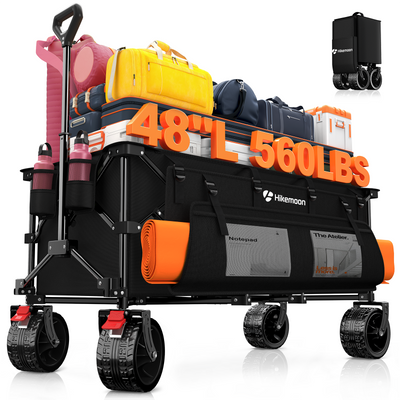

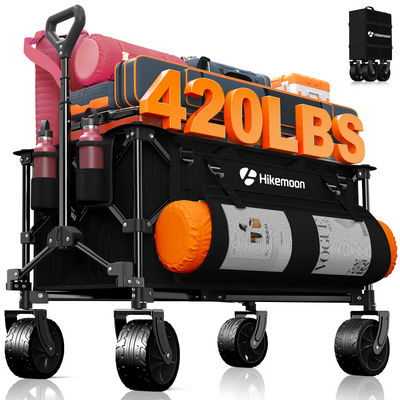

A folding wagon that suddenly feels hard to pull usually has one of four problems: the load is off-center, a brake or wheel is dragging, debris is wrapped around an axle, or the wheels do not suit the surface. Unload it first, release every brake, and test each wheel separately. If one wheel binds, wobbles, grinds, or sits out of alignment, stop using the wagon until that wheel or its mount is serviced.
Start With a Two-Minute Empty-Wagon Test
Move to a flat, hard surface and remove all cargo. Confirm that every parking brake is fully released, extend the handle, and pull the empty wagon in a straight line. Then make a gentle turn in each direction.
If the empty wagon rolls normally, the problem is probably load placement or terrain rather than a seized wheel. If it still feels heavy, drifts, or resists one turn, inspect the wheels before loading it again.

Why Is a Folding Wagon Hard to Pull?
The fastest diagnosis is to match the symptom to the most likely area. Do not assume that a larger load is the only cause.
| What you notice | Likely area | First check |
|---|---|---|
| Easy when empty, heavy when loaded | Load or terrain | Center the load low over the wagon bed and test on pavement |
| Wagon pulls to one side | One wheel, brake, or swivel | Compare left and right wheels by hand |
| Wheel rolls but will not swivel | Swivel race or mounting fork | Check for debris, corrosion, looseness, or bending |
| Wheel will not turn | Axle, hub, brake, or bearing | Release the brake and inspect for wrapped material |
| Only difficult on sand, gravel, or soft grass | Wheel-to-surface mismatch | Reduce the load and compare performance on firm ground |
1. Repack an Uneven or Top-Heavy Load
An off-center load puts more resistance on one side and can make the front swivel wheels fight the direction of travel. Tall items can also shift during a turn, changing how much weight each wheel carries.
Place dense items low and near the center of the bed. Divide weight from left to right, keep cargo clear of the wheels, and secure anything that can slide. Stay within the capacity stated in your wagon manual; a capacity rating does not mean every terrain will remain easy to cross at that load.
2. Match the Wheels to the Ground
A wagon may roll freely on concrete yet drag on loose gravel, rutted grass, or dry sand. Narrow wheels sink more readily into soft surfaces, while wider wheels spread the load across a larger contact area. Diameter, tread, wheel material, and total cargo weight also affect rolling effort.
If the problem appears only at the beach, compare wagon wheel width, size, and material for sand. For mixed campsite routes, the folding wagon camping guide explains how wheel design and route conditions work together.

3. Confirm That the Brakes Are Fully Released
A partly engaged foot brake can look released while its mechanism still rubs the wheel. Compare the braked wheel with the matching wheel on the other side. Both should rotate without the same spot catching on every revolution.
Do not force a sticky brake lever or bend its parts. Clean away visible dirt according to the product manual. If the brake does not release cleanly, contact the manufacturer or replace the approved assembly before hauling again.
4. Remove Hair, String, Grass, and Sand
Wrapped fibers at the axle can slow a wheel gradually, while a pebble or packed sand can stop it abruptly. With the wagon unloaded and stable, inspect both sides of every hub and the swivel area above each front wheel.
Remove loose debris without cutting seals or scraping the axle. Wipe the area clean and dry. Caster manufacturer Hamilton recommends periodic inspection and removal of foreign debris; it also advises checking axles and bearings for wear rather than treating every problem as a lubrication issue.
5. Compare Wheel Rotation and Swivel Action
Lift or tip the unloaded wagon only as the manufacturer permits. Spin each wheel by hand, then rotate each front caster through its steering range. The paired wheels should feel broadly similar.
A wheel that stops immediately, catches at one point, makes a grinding sound, or has side-to-side play may have a damaged hub or bearing. A wheel that spins but will not change direction points instead to the swivel joint or mounting hardware.
6. Inspect for a Bent Fork, Loose Mount, or Frame Twist
Look at the wagon from the front on a flat floor. The paired wheels should sit at comparable angles, and the mounting forks should not lean differently. Check accessible fasteners against the manual, but do not guess at torque values or substitute hardware.
If the wagon pulls to one side after cleaning and repacking, visible misalignment is a reason to stop. A bent fork, cracked weld, distorted frame member, or loose wheel mount needs approved service or replacement, not a forceful bend-back repair.

7. Lubricate Only Where the Manual Allows
Some wheel or swivel assemblies are sealed, while others have service points. Use only the lubricant type and location specified by the wagon manufacturer. Spraying a general-purpose product onto every joint can attract grit, contaminate a brake, or mask a worn component.
Clean and dry the area before approved lubrication, then retest it empty. The maintenance section in HIKEMOON's yard work wagon guide also covers cleaning after soil and outdoor debris.
8. Check the Handle and Folding Frame
If all wheels move freely, inspect the handle pivot and folding frame. A handle that is not fully extended or locked can feel awkward and transmit poor steering input. Fabric, straps, or cargo should not rub a tire or interfere with the folding joints.
Open the wagon completely on level ground and verify that the frame sits square. Stop if a hinge binds, a tube is bent, a connection is cracked, or the bed no longer opens evenly.
When Should You Stop Using the Wagon?
Do not keep pulling a wagon that has a seized wheel, repeated grinding, severe wobble, a brake that will not release, a bent wheel mount, a cracked frame, or a wheel that can detach. Continued use can worsen the damage and make control less predictable.
Use the model manual to identify approved parts and service steps. If the problem appeared after an impact, overloading event, or corrosion, ask the manufacturer to assess the wheel assembly rather than improvising a structural repair.
Frequently Asked Questions
Why does my wagon pull to one side?
First check for an uneven load, a partly engaged brake, debris on one axle, or one caster that does not swivel freely. If the wagon still drifts while empty on flat pavement, inspect the wheel mounts for looseness or misalignment.
What should I do when wagon wheels are not turning?
Unload and stabilize the wagon, release the brakes, and remove visible debris from the hub and axle area. If a wheel remains seized, grinds, or has excessive play, stop using it and seek an approved replacement or service.
Can I use WD-40 or oil on folding wagon wheels?
Use only the lubricant and service points named in the product manual. Some assemblies are sealed, and an unsuitable spray can attract dirt or reach a braking surface.
Why is my wagon difficult to steer only on grass or sand?
Soft ground increases rolling resistance and lets narrow wheels sink, especially under a heavy load. Reduce and center the cargo, then test on firm ground; if it becomes easy to steer, the main issue is the wheel, load, and terrain combination.
Should front wagon wheels swivel freely?
Swivel wheels should rotate through their intended steering range without binding, but exact behavior varies by design. Compare paired wheels and follow the model manual if one feels rough or stops at an unusual angle.
The Practical Decision Rule
If the wagon rolls straight while empty and improves after the load is centered, adjust how and where you haul. If one wheel still binds, wobbles, grinds, or sits crooked on flat ground, treat it as a component problem and service the wagon before the next trip.