
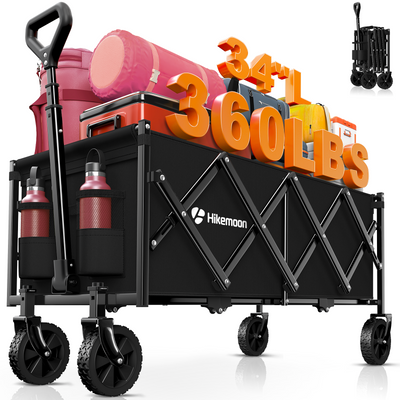
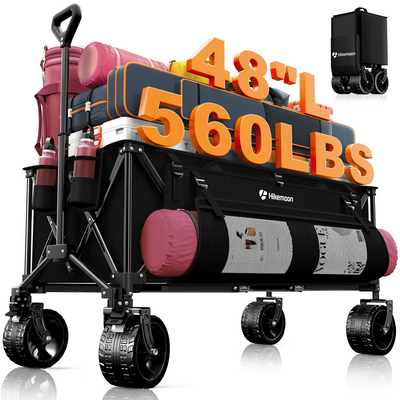
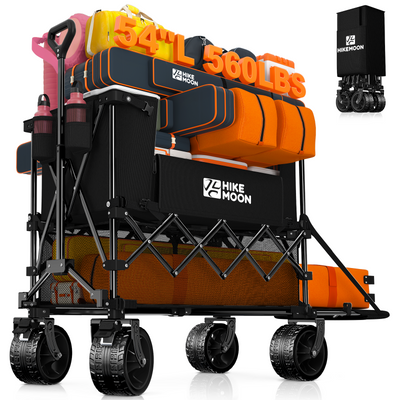
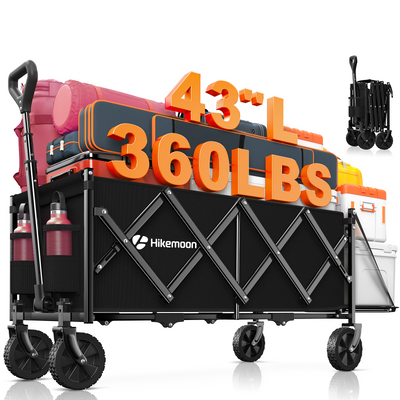
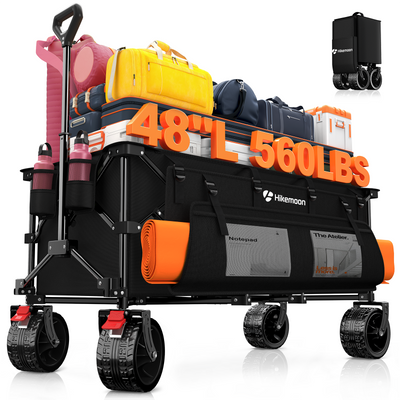

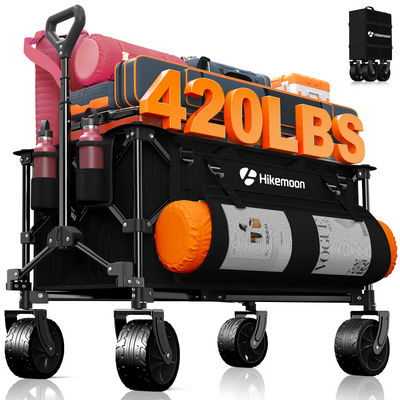

A folding wagon is usually better for moving loose, bulky, or mixed gear across flat ground, parking lots, grass, parks, campsites, and outdoor event spaces. A hand truck is usually better for moving boxes, appliances, tall loads, and heavy items that need vertical support. The better choice depends on what you move, how heavy it is, what shape it has, and where you need to take it.
Folding Wagon vs Hand Truck at a Glance
Folding wagons and hand trucks both help you move things with less carrying, but they are built for different load types. A folding wagon gives you open cargo space for multiple items, while a hand truck gives you vertical support for stacked or upright loads.
|
Compare |
Folding Wagon |
Hand Truck |
|
Best for |
Loose, bulky, mixed gear |
Boxes, appliances, tall loads |
|
Common use |
Camping, beach, sports, garden, groceries, outdoor events |
Moving boxes, small appliances, furniture pieces, warehouse items |
|
Cargo style |
Open bin-style space |
Upright platform and back frame |
|
Best surface |
Flat ground, grass, parks, parking lots, outdoor paths |
Smooth floors, sidewalks, curbs, tight indoor routes |
|
Load shape |
Irregular items, bags, coolers, chairs, tools |
Stackable boxes, vertical items, heavy compact loads |
|
Storage |
Usually folds compactly |
Some fold, but many stay upright |
|
Main limitation |
Not ideal for stairs or tall stacked loads |
Loose items may fall without straps |
In simple terms, choose a folding wagon when you need to carry many different items in one trip. Choose a hand truck when your load is heavy, upright, box-shaped, or easier to stack.
What Is a Folding Wagon Best For?
A folding wagon works best when the load is not one single heavy object, but a mix of items that would be awkward to carry by hand. It is especially useful when you need open cargo space instead of vertical support.
Loose, Bulky, and Mixed Gear
A folding wagon is a better fit for loose, bulky, and mixed gear because the open cargo area can hold items that do not stack neatly. This can include grocery bags, storage bins, sports bags, folding chairs, coolers, toys, blankets, tools, and outdoor supplies. These items may slide off a hand truck unless they are strapped down, but they can sit more naturally inside a wagon.
For users who often move a mix of coolers, folding chairs, sports bags, tools, groceries, and outdoor supplies, the 300L Extra Large Foldable Wagon Cart is a relevant option to compare. It offers a 300L capacity, a reinforced alloy steel frame with up to 560 lbs static load capacity and 440 lbs dynamic load capacity, tear-resistant waterproof 600D Oxford fabric, and 7" × 4" all-terrain wheels with brakes. These features make it a better fit for mixed outdoor loads than a narrow upright hand truck, but the load should still be kept low and balanced for safer pulling.

Outdoor, Sports, Camping, and Yard Supplies
For outdoor use, a folding wagon is often more practical than a hand truck. Camping gear, beach supplies, sports equipment, picnic items, garden tools, soil bags, and kids’ outdoor items are usually mixed in shape and size. A wagon lets you place these items inside the cargo area and pull them from the car to the field, campsite, garden, or beach path with fewer trips.
Longer Trips Across Flat or Uneven Outdoor Ground
A folding wagon is useful when you need to move gear across a parking lot, sidewalk, park, grass, dirt path, or outdoor event area. Wider wheels and a low cargo area can make it easier to pull multiple items over longer distances. It is not the right tool for stairs, but for flat or mildly uneven outdoor ground, it is often easier than carrying everything by hand.
What Is a Hand Truck Best For?
A hand truck, also called a dolly in many situations, is better for loads that can stand upright, stack neatly, or rest against a frame. It is more focused on moving heavy, compact items than carrying mixed outdoor gear.
Boxes, Appliances, and Stackable Loads
A hand truck is usually better for moving cardboard boxes, storage bins, small appliances, office supplies, and other stackable items. The upright frame helps support the load, and the lower plate slides under boxes or heavy objects. This makes a hand truck more useful for apartment moves, warehouse tasks, delivery work, and garage storage projects.
Heavy Items That Need Vertical Support
Some items are too heavy or too tall to sit safely inside a wagon. A hand truck can be better for things like compact furniture pieces, small refrigerators, heavy cartons, toolboxes, or tall boxes because the load can lean against the back frame. This support helps keep the item more controlled, especially when moving through doorways or along smooth indoor floors.
Curbs, Tight Indoor Spaces, and Occasional Steps
A hand truck can be easier to manage in narrow hallways, elevators, doorways, and tight indoor spaces because it has a slimmer footprint than most wagons. It may also handle curbs or occasional steps better than a folding wagon, but this does not mean every hand truck is safe for stairs. Stairs require caution, proper technique, and, in many cases, a hand truck designed for stair use.
Folding Wagon vs Hand Truck: Key Differences
The main difference is not just weight capacity. The real difference is how each tool supports the load and how it moves across different routes.
Load Shape and Cargo Stability
A folding wagon is better for low, loose, and spread-out loads. Items sit inside the cargo area, which helps keep bags, chairs, toys, tools, and outdoor gear together. A hand truck is better for vertical stability, especially when boxes or upright items can lean against the frame. If your load is tall and stackable, a hand truck usually feels more controlled. If your load is wide, soft, loose, or mixed, a folding wagon is usually easier.
Weight Handling and Lifting Effort
A hand truck can handle heavy compact loads well, but you usually need to tilt the load back and control its balance. That may require more arm, shoulder, or back control, especially when the item is heavy. A folding wagon does not require the same tilting motion because items sit inside the wagon, but you still need to pull the total weight and avoid overloading it. For many medium-weight items, a wagon can reduce repeated lifting. For one heavy box or appliance, a hand truck may be more efficient.
Wheels, Ground Surface, and Route
Wheel design matters a lot. A folding wagon with larger outdoor wheels can work better on grass, packed dirt, parks, parking lots, and outdoor event areas. A hand truck often works best on smooth floors, sidewalks, driveways, warehouses, and indoor routes. On soft sand, thick grass, gravel, or uneven ground, a small-wheel hand truck may struggle. If beach routes are part of your use case, the way wagon wheels for sand handle soft ground can matter more than weight capacity alone. On stairs or tight turns, a wagon may be harder to control.
Storage, Portability, and Everyday Use
Many folding wagons collapse into a compact shape, which makes them convenient for car trunks, garages, closets, and small homes. Hand trucks vary: some fold flat, while others are rigid and take more vertical storage space. For everyday family use, a folding wagon may be more versatile because it can carry groceries, sports gear, garden supplies, and outdoor items. For repeated moving or delivery tasks, a hand truck may be more practical.
Which Tool Fits Common Moving Scenarios?
The best way to choose is to think about your most common route and load. A tool that works well for boxes may not work well for camping gear, and a tool that works well on grass may not be best for stairs.
Apartment Moves and Parking Garage Trips
For apartment moves, a hand truck is usually better for stacked boxes, storage bins, and small appliances. It can move through elevators, hallways, and tight doorways more easily than a wide wagon. However, if you are moving groceries, bags, laundry, small household items, or loose supplies from a parking garage to an apartment, a folding wagon may be more convenient because it can hold mixed items in one trip.

Camping, Beach, Sports, and Outdoor Events
A folding wagon is usually the better choice for camping, beach days, sports games, parks, picnics, and outdoor events. These situations often involve loose and bulky gear such as chairs, coolers, tents, blankets, umbrellas, toys, water bottles, and team bags. For sideline use, field days, and weekend games, a wagon for sporting events also needs to handle frequent stops, mixed equipment, and longer walks from the parking lot. A hand truck can work for stacked boxes or equipment cases, but it is less convenient when the load is made of many soft or irregular items. If most of your moving happens between the car, campsite, beach path, sports field, park, or outdoor event space, comparing outdoor wagons can help you focus on cargo space, wheel design, folded size, and how the wagon handles mixed gear outside.
Garage, Garden, and Yard Work
For garage and yard work, the better tool depends on what you move most often. A folding wagon is useful for plants, soil bags, mulch, leaves, hand tools, cleaning supplies, and mixed garage items. A hand truck is better for heavy boxes, tool chests, small appliances, or tall storage containers. If your tasks are mostly outdoor and involve many loose items, a wagon is usually more practical. Loading habits also matter here: keeping heavy items low, separating sharp tools, and avoiding top-heavy piles are simple yard work wagon tips that can make a folding wagon easier to control. If your tasks involve heavy upright objects, a hand truck has the advantage.
Small Business, Market, and Event Supplies
For small business owners, market vendors, photographers, and event staff, both tools can be useful. A folding wagon is better for mixed supplies such as display items, bags, fabric goods, soft cases, folding chairs, and loose materials. A hand truck is better for stacked cartons, crates, equipment cases, and heavier upright loads. If you move from a vehicle to a booth or event space over a long flat route, a wagon may save trips. If your supplies are packed into boxes, a hand truck may move them more efficiently.
Common Mistakes When Choosing Between Them
Many users choose the wrong tool because they only look at weight capacity, price, or folded size. The more important question is whether the tool matches the load shape and route.
Choosing by Weight Capacity Alone
Weight capacity matters, but it should not be the only factor. A wagon with high capacity may still be hard to pull if the load is stacked too high or placed unevenly. A hand truck may handle heavy boxes well, but loose bags and awkward gear may fall unless secured. Real-world cargo size, weight distribution, wheel design, and surface type all affect how useful the tool feels. Matching the load to realistic folding wagon sizes can be more useful than choosing the largest model by number alone.
Using a Folding Wagon for Stairs or High-Stacked Loads
A folding wagon is not the best choice for stairs, tall stacks of boxes, or loads that need strong vertical support. If the cargo is stacked too high, it can shift, tip, or become harder to control. For safety, heavy items should sit low in the wagon, and the load should not block your view or pull the wagon off balance.
Using a Hand Truck for Loose Gear Without Securing It
A hand truck can be frustrating for loose items if you do not secure them. Sports bags, folding chairs, coolers, soft bags, toys, and camping gear may slide, swing, or fall from the platform. If you use a hand truck for mixed gear, straps or bungee cords are often needed. Without them, a folding wagon may be easier and faster.
What Should You Check Before Buying?
Before buying either tool, match it to your real use case. Do not buy only based on the biggest number in the product description.
Load Capacity and Real-World Cargo Size
Check both weight capacity and usable cargo size. A folding wagon should have enough space for your common gear, not just a high weight rating. A hand truck should have a strong frame and a platform that fits the bottom of your boxes or equipment. Also think about how the load sits: low and spread out usually fits a wagon better, while tall and upright usually fits a hand truck better.
Wheel Size, Handle Design, and Ground Surface
Look at wheel size and handle design based on where you will use the tool. Larger or wider wheels are usually better for outdoor surfaces such as grass, packed dirt, gravel paths, and parks. Smaller hard wheels may work well indoors but can struggle outside. The handle should also feel comfortable for your height and route, especially if you will pull or steer the tool over a longer distance.
Folded Size, Storage Space, and Use Frequency
Check how much storage space the tool needs when not in use. A folding wagon may be easier to store in a trunk, closet, or garage corner, while a rigid hand truck may take more vertical space. After outdoor use, it also helps to clear debris before you fold a wagon cart, especially if the wheels or frame picked up dirt, grass, or sand. Also consider how often you will use it. If you need a tool for frequent outdoor activities, a folding wagon may get more use. If you often move boxes, appliances, or stacked loads, a hand truck may be the better long-term choice.

Final Thoughts
A folding wagon and a hand truck are both useful, but they are not designed for the same job. A folding wagon is usually better for moving loose, bulky, mixed gear across flat or outdoor surfaces. A hand truck is usually better for heavy boxes, appliances, tall loads, and items that need vertical support.
For most family outdoor use, sports gear, camping supplies, gardening items, and event gear, a folding wagon is often the more flexible choice. For moving boxes, furniture pieces, small appliances, and upright heavy items, a hand truck is usually more efficient. The best choice is the one that matches your load shape, route, surface, storage space, and how often you plan to use it.
FAQs
Is it better to push or pull a wagon?
Most folding wagons are designed to be pulled by the handle. Pulling usually gives better control when moving across parking lots, grass, parks, campsites, and outdoor paths. Some wagons may be maneuvered a short distance in a tight space, but you should follow the product instructions and avoid pushing or towing the wagon in ways the model is not designed for.
Is it safer to push or pull a cart?
Safety depends on the cart type, load weight, surface, and route. A folding wagon is usually pulled, while a hand truck may be pushed or pulled depending on the load and space. For either tool, keep heavy items low, move slowly on slopes, and avoid sudden turns when the load is heavy.
Can I use a hand truck for moving furniture?
Yes, a hand truck can work for some furniture pieces, especially compact, upright, or box-shaped items. Use straps, padding, and careful control to prevent shifting or scratches. Large, fragile, awkward, or very heavy furniture may need two people or a different moving tool.
Which is easier to maneuver, a folding wagon or a hand truck?
A folding wagon is often easier to move across open outdoor spaces when carrying loose or mixed gear. A hand truck is often easier in narrow indoor spaces, elevators, doorways, and stacked-box situations. Maneuverability depends mainly on the load shape, wheel design, and route.