
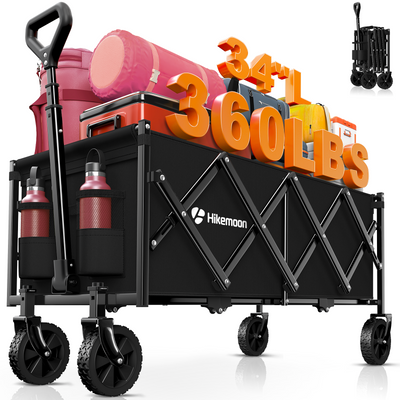
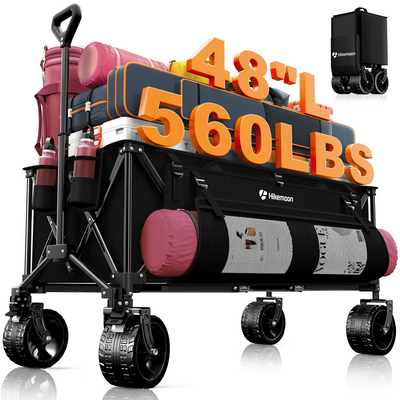
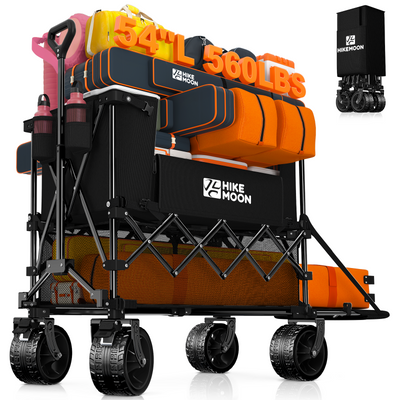
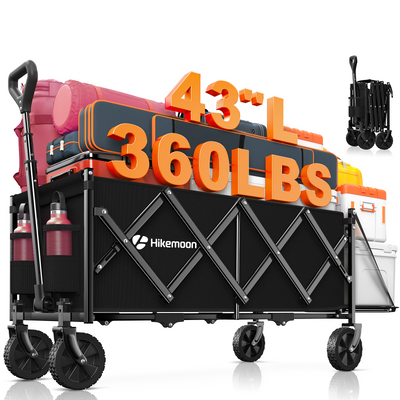
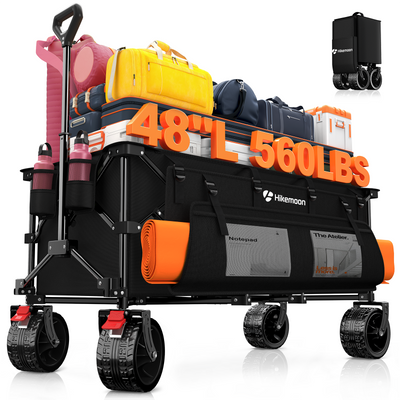

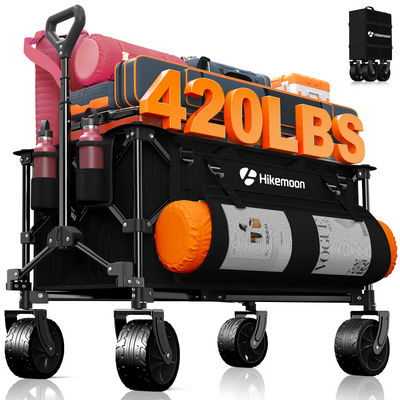

You do not always need brakes on a folding wagon. Brakes are most useful on slopes, parking lots, campsites, sports fields, grass, gravel, or when loading heavier items. For light errands on flat ground, they may be helpful but not essential. The real question is how often the wagon needs to stay still while you load, unload, or pause outdoors. This article explains when brakes matter, when they are optional, and what else to check before choosing a folding wagon.
What Do Folding Wagon Brakes Actually Do?
Folding wagon brakes are mainly a parking and stability feature. They help reduce unwanted movement when the wagon is stopped, especially during everyday use.
Brakes Help Keep the Wagon Still When Stopped
The main purpose of wagon brakes is to reduce rolling when the wagon is parked. This can make loading and unloading easier when you need both hands free.For example, brakes can help when you are unloading groceries from a car, placing a cooler into the wagon, loading garden supplies, or organizing sports gear beside a field.

Brakes Are Not Active Downhill Control
Most folding wagon brakes work more like parking brakes than active downhill brakes. They are not meant to control a heavy wagon while it is moving down a slope.If you pull a loaded wagon downhill, you still need to hold the handle, move slowly, and avoid overloading it. Brakes may help when the wagon is stopped, but they should not be your only form of control.
When Do You Need Brakes on a Folding Wagon?
Brakes become more important when the ground is uneven, the load is heavy, or the wagon needs to stay parked during loading and unloading. If your main use includes grass, gravel, campsites, parks, or sports fields, comparing outdoor wagons can help you look beyond size and focus on wheel design, frame stability, and how the wagon behaves when stopped.
Sloped Driveways, Parking Lots, and Garage Ramps
Brakes are useful if you often use your wagon on a sloped driveway, parking lot, garage ramp, or uneven sidewalk. These are common places where a wagon may roll if you let go of the handle. This matters during simple tasks like unloading groceries, moving supplies from the garage to the yard, or carrying gear from a parking area to a campsite or sports field.
Camping, Sports Fields, Parks, and Outdoor Events
Outdoor spaces are rarely perfectly flat. Grass, dirt, gravel, small slopes, and crowded event areas can make a wagon harder to keep still. For camping, sports games, picnics, park days, tailgating, and outdoor events, brakes can make the wagon easier to park beside a tent, field, table, or vehicle. If your weekends often involve chairs, coolers, team bags, and sideline gear, a wagon for sporting events should have stable wheels and be easy to manage during frequent stops.
Heavy Loads, Coolers, Drink Packs, and Garden Supplies
Brakes are more valuable when the wagon carries heavier items. A loaded wagon can be harder to hold still if it begins to roll, and it may shift more during loading. This can include coolers, drink packs, soil bags, mulch bags, garden tools, beach gear, and sports equipment. Brakes will not fix poor loading, but they can help keep the wagon steadier while you arrange or remove items. For garden use, the same yard work wagon tips still apply: keep heavier items low, avoid stacking loose tools too high, and split oversized loads when the wagon becomes hard to control.
When Are Brakes Helpful but Not Essential?
Not every folding wagon needs brakes. If your loads are light and your route is mostly flat, brakes may be a convenience rather than a required feature.
Flat Sidewalks, Patios, and Indoor Storage Areas
If you mainly use a wagon on flat sidewalks, patios, garage floors, or indoor storage areas, brakes may not be essential. On level ground, a lightly loaded wagon is less likely to roll away. In these cases, wheel quality, folded size, handle comfort, and storage convenience may matter more than brakes.
Light Grocery Runs and Short Everyday Errands
For light grocery runs or short everyday errands, brakes are helpful but not always necessary. If the route is flat and you do not leave the wagon unattended, a simpler folding wagon may be enough. Brakes become more useful if your route includes a parking garage, apartment ramp, curb cut, uneven sidewalk, or sloped driveway.
Folding Wagon With Brakes vs Without Brakes
The choice depends on where and how you use the wagon. A wagon with brakes gives more control when stopped, while a wagon without brakes may still work well for flat and simple use.
|
Compare |
Folding Wagon With Brakes |
Folding Wagon Without Brakes |
|
Best for |
Outdoor use, slopes, heavier loads, frequent stops |
Flat surfaces, light errands, simple hauling |
|
Main benefit |
Better parked stability |
Simpler structure |
|
Loading and unloading |
Easier to keep still |
May move on uneven ground |
|
Outdoor use |
More useful on grass, gravel, campsites, and parking lots |
Better for smoother surfaces |
|
Better fit |
Users who want more control when stopped |
Users with light loads and flat routes |
In simple terms, choose brakes if you often stop on uneven or sloped surfaces. A wagon without brakes can still make sense if your loads are light and your route is mostly flat.
For users who often carry outdoor gear, groceries, coolers, or other bulky everyday items, the 300L Extra Large Foldable Wagon Cart is a relevant option because it combines a large 300L cargo space with 7" × 4" all-terrain wheels with brakes. It is better suited to frequent outdoor hauling than a basic flat-surface wagon, but the brakes should still be treated as a stopped-stability feature rather than downhill control.
What Brakes Can and Cannot Prevent
Brakes are useful, but they have limits. They can improve stopped stability, but they do not replace careful loading, suitable wheels, or proper handle control.
Brakes Can Reduce Rolling During Loading and Unloading
Brakes can help reduce rolling when the wagon is parked, loaded, unloaded, or stored. This is useful when you need both hands free to move groceries, camping gear, sports equipment, or garden supplies. They are also helpful when you stop briefly on a mild slope or uneven surface. Locking the wheels before loading or unloading gives the wagon a steadier base.
Brakes Cannot Prevent Every Tip, Slide, or Load Shift
Brakes mainly reduce wheel movement. They do not automatically prevent tipping, sliding on loose ground, or shifting caused by poor loading. A wagon can still become unstable if heavy items are stacked too high, most of the weight is placed on one side, the wagon is overloaded, or the ground is steep, wet, sandy, or loose.
Brakes vs Wheels: Which Matters More?
Brakes and wheels solve different problems. Wheels affect how the wagon moves, while brakes affect how the wagon stays put.
Wheels Affect How the Wagon Moves
Wheel size, width, and material affect how easily a folding wagon rolls over grass, sand, gravel, pavement, dirt, and uneven ground. If you use the wagon mostly outdoors, wheel design is one of the most important features to check. Wider or stronger wheels can make the wagon easier to pull across rough or soft surfaces.
Brakes Affect How the Wagon Stays Put
Brakes matter most after the wagon stops. They help keep the wagon in place during parking, loading, unloading, and short breaks. A wagon can have good wheels but still benefit from brakes if it is used on slopes or busy outdoor areas. At the same time, brakes will not make small or weak wheels perform well on rough ground.
What Should You Check Before Buying?
Brakes should be part of the buying decision, but they should not be the only feature you consider. A good folding wagon should match your load, terrain, storage space, and handling needs.
Brake Placement and Ease of Use
Check where the brakes are placed and how easy they are to engage. Many folding wagon brakes are foot-operated wheel locks, but designs vary. A practical brake should be easy to use without awkward bending or guessing. This matters more if you plan to use the wagon often or share it with other family members.
Wheel Size, Wheel Width, and Ground Surface
Match the wheels to your main surface. Smooth pavement does not require the same wheel design as grass, sand, gravel, or dirt. For outdoor use, look for wheels that are wide and sturdy enough for the terrain. Brakes help when the wagon is stopped, but the wheels still need to move well across the ground you actually use. On softer surfaces, especially beach paths or loose sand, wagon wheels for sand need enough width and support so the wagon does not sink or drag before braking even becomes useful.

Load Capacity, Frame Strength, and Handle Control
Check the listed load capacity and make sure it fits your usual items. Coolers, drink packs, soil bags, bulk groceries, and garden supplies can add weight quickly.Frame strength and handle control also matter. A stable frame helps the wagon feel more secure, while a comfortable handle makes it easier to pull, steer, and hold steady when loaded.
Final Thoughts
You do not need brakes on every folding wagon. For light use on flat ground, brakes may be optional. For slopes, parking lots, campsites, sports fields, gardens, heavier loads, or frequent loading and unloading, they are worth considering. The key is to treat brakes as a stopped-stability feature. They help keep the wagon still when parked, loaded, or unloaded, but they do not replace strong wheels, a stable frame, proper loading, or careful handling on slopes.
FAQs
Do folding wagon brakes work on slopes?
Folding wagon brakes can help hold the wagon still on mild slopes, but they should not be relied on for steep hills. Keep control of the handle and avoid leaving a loaded wagon unattended on a slope.
Can brakes stop a fully loaded wagon?
Brakes can help keep a fully loaded wagon from rolling when it is stopped, but their effectiveness depends on the brake design, surface, load weight, and slope. They should not be the only way to control a heavy wagon.
Do brakes prevent a folding wagon from tipping?
No. Brakes reduce wheel movement, but they do not prevent tipping caused by uneven loading, sharp turns, steep ground, or a high center of gravity. Keep heavy items low and centered.
Should you lock wagon wheels when loading and unloading?
Yes, it is a good habit to lock the wheels before loading or unloading if the wagon has brakes. This helps keep the wagon steadier while you move items in or out.
Do folding wagon brakes work on grass, gravel, or sand?
They can help, but performance depends on the surface and brake design. Brakes may be less effective on loose sand, gravel, wet grass, or steep uneven ground than on firm, flat surfaces.