
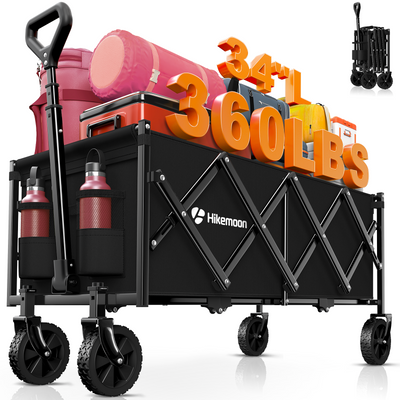
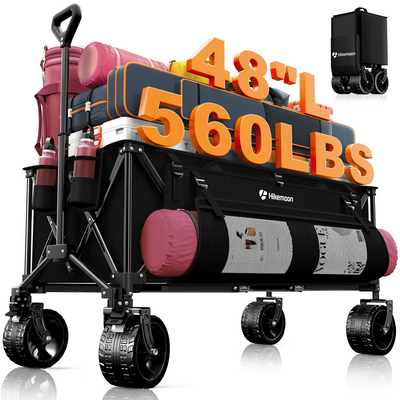
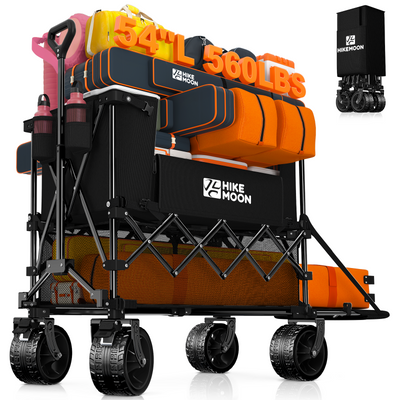
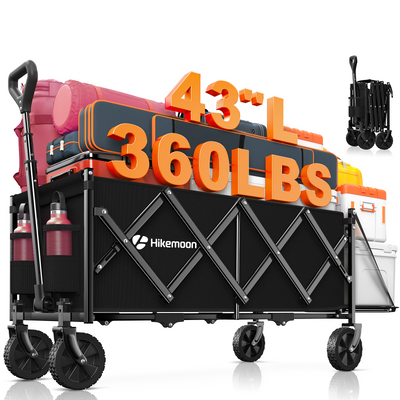
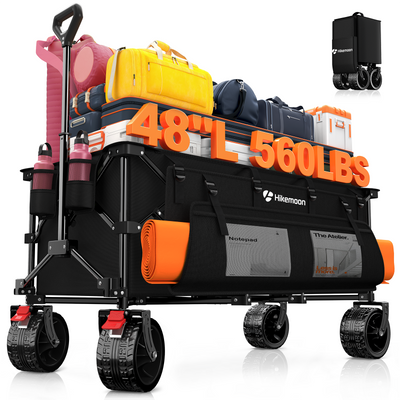

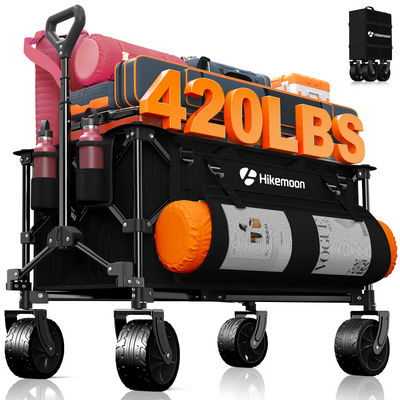

A garden wagon is better for stable hauling, such as potted plants, tools, bagged soil, mulch bags, leaves, and yard cleanup. A wheelbarrow is better for loose soil, compost, gravel, rocks, and heavy materials that need dumping. This guide helps you choose based on your load type, yard surface, and storage space.
What a Garden Wagon Is Used For
A garden wagon is used for stable hauling around the yard, garden, patio, or driveway. It works well for potted plants, hand tools, watering cans, soil bags, mulch bags, fertilizer, leaves, branches, and other mixed garden supplies.
Unlike a wheelbarrow, a garden wagon is usually better for carrying and organizing items rather than dumping loose material. This makes it useful for everyday gardening, light yard cleanup, and tasks where stability matters more than tipping and unloading.
What a Wheelbarrow Is Used For
A wheelbarrow is used for moving and dumping loose, heavy, or messy materials. It is especially useful for soil, sand, compost, gravel, rocks, mulch, and wet yard debris.
The main advantage is the tipping tray. If you need to dump material into a raised bed, planting area, trench, pile, or garden path, a wheelbarrow is usually more efficient than a garden wagon.
Garden Wagon vs Wheelbarrow
The easiest way to choose is to match the tool to the task. A garden wagon is better for stable carrying. A wheelbarrow is better for dumping loose material.
|
Compare |
Garden Wagon |
Wheelbarrow |
|
Best for |
Tools, potted plants, bagged supplies, leaves, branches |
Loose soil, compost, sand, gravel, rocks |
|
Main advantage |
Stable carrying and organization |
Fast dumping |
|
Ease of use |
Easier for beginners and light yard work |
Better for users comfortable with lifting and balancing |
|
Storage |
Folding options may save space |
Traditional models can be bulky |
|
Better fit |
Daily gardening and cleanup |
Heavy yard work and landscaping tasks |
In simple terms, choose a garden wagon if you mostly move items from one place to another. Choose a wheelbarrow if you need to move and dump loose or heavy materials.
When Is a Garden Wagon the Better Choice?
A garden wagon is the better choice when stability, easy loading, and everyday convenience matter more than dumping. It works well for routine gardening tasks, especially when your loads are mixed, bulky, or packed in bags.

Moving Potted Plants, Tools, and Bagged Supplies
Garden wagons are useful for moving potted plants because the cargo area gives pots a more stable place to sit. They also work well for soil bags, mulch bags, fertilizer, plant food, gloves, pruners, trowels, watering cans, and other garden supplies that need to stay organized while moving.
Yard Cleanup, Leaves, and Branches
For yard cleanup, a garden wagon is often more practical than a wheelbarrow. Leaves, weeds, grass clippings, and small branches are usually bulky rather than extremely heavy, so a wider wagon can hold them without requiring careful balancing. The same yard work wagon tips still apply: keep heavier items low, avoid letting sharp branches press directly into the fabric, and clean the wheels before storing the wagon indoors.
Small Gardens, Patios, and Light Yard Work
A garden wagon is a strong choice for small gardens, raised beds, patios, and light yard work. These spaces often involve tools, pots, bags, and supplies rather than large piles of loose dirt, so stable hauling is usually more useful than a dumping tray.
When Is a Wheelbarrow the Better Choice?
A wheelbarrow is the better choice when the job involves loose, heavy, or messy materials. It is built for tasks where quick dumping matters.
Moving Loose Soil, Sand, Compost, or Gravel
Loose soil, sand, compost, and gravel are usually better suited to a wheelbarrow. The deep tray helps contain the material, and the tipping design lets you unload it quickly without shoveling everything out by hand.
Dumping Heavy Materials
Dumping is the main advantage of a wheelbarrow. If you are moving compost from a pile to several garden beds or spreading gravel across a path, a wheelbarrow lets you tip each load directly where it needs to go.
Narrow Paths and Frequent Dumping
Wheelbarrows can be easier to maneuver through narrow garden paths, small gates, tight corners, and spaces between raised beds. A one-wheel design can turn more easily than a wider wagon, but it also requires more balance when loaded.
Which One Is Easier to Use?
Ease of use depends on the user, the load, and the yard surface. A tool that feels easy on a flat driveway may feel harder on grass, gravel, slopes, or soft soil.
For Beginners and Occasional Gardeners
For beginners, a garden wagon is usually easier to use. It does not require as much balancing, and the cargo area is easier to load with mixed items such as tools, plants, bags, and cleanup debris.
For Seniors or Users Who Want More Stability
For seniors or users who want more stability, a garden wagon is often the better choice. Four-wheel wagons support the load more evenly and usually do not require the user to lift much weight through the handles.
For Users Who Often Move Heavy Yard Materials
For heavy yard materials, the better choice depends on the material. Loose soil, gravel, sand, compost, and rocks usually favor a wheelbarrow, while bagged soil, mulch bags, tools, and potted plants usually favor a garden wagon.
What Should You Check Before Choosing One?
Before choosing between a garden wagon and a wheelbarrow, look at how you actually work in your yard. The product name matters less than the load type, wheel design, ground surface, and storage space.
Load Type: Loose, Bagged, Bulky, or Mixed
Loose materials, such as soil, compost, sand, gravel, and mulch piles, are usually better for a wheelbarrow. Bagged materials, potted plants, tools, leaves, branches, and mixed supplies are usually easier to manage in a garden wagon.
Wheel Design and Ground Surface
Wheels affect how easy the tool is to move. Smooth patios and paved driveways are easy for most wagons and wheelbarrows, while grass, gravel, soft dirt, roots, and slopes need stronger wheels, better traction, and a stable frame.
Storage Space in a Garage, Shed, or Patio Area
Storage is an important part of the decision. Traditional wheelbarrows can take up a lot of room, while some garden wagons can collapse into a smaller shape after use. If storage space is limited, folded size may matter as much as load capacity, because different folding wagon sizes can feel very different in a garage, shed, trunk, or patio corner.
Is a Folding Garden Wagon a Good Alternative?
A folding garden wagon can be a good alternative for many home gardeners. It is not the same as a wheelbarrow, but it can replace one for certain light and medium yard tasks.
When a Folding Garden Wagon Makes Sense
A folding garden wagon makes sense when your main tasks include moving tools, potted plants, bagged soil, mulch bags, watering supplies, small branches, leaves, and everyday outdoor items. It is also useful when storage matters because it can fold down after use. Daily use is easier when you know how to fold a wagon cart properly, especially after muddy garden work, leaf cleanup, or repeated trips between the garage and yard.
For homeowners who want stable hauling without keeping a bulky wheelbarrow in the garage, the 220L Utility Foldable Collapsible Wagon Cart with Big All-Terrain Wheels is a relevant option. It offers 220L capacity, 7" × 4" all-terrain wheels, and a compact folded size of 9.06" L × 12.20" W × 24.00" H, making it a practical fit for bagged supplies, tools, potted plants, and everyday hauling. It is not meant to replace a wheelbarrow for repeated dumping of loose soil, gravel, or rocks.

When a Wheelbarrow Is Still the Better Tool
A wheelbarrow is still the better tool when you need to move loose soil, sand, compost, gravel, rocks, or wet mulch and dump it repeatedly. It is also better for rough, sharp, or very heavy materials that may damage fabric or require a hard tray.
Final Thoughts
A garden wagon and a wheelbarrow both make yard work easier, but they are built for different jobs. A garden wagon is better for stable hauling, potted plants, tools, bagged supplies, leaves, branches, and light to medium yard cleanup. A wheelbarrow is better for loose soil, sand, compost, gravel, rocks, and heavy materials that need to be dumped.
For everyday home gardening, a garden wagon may be easier to use and store. For heavier landscaping work, a wheelbarrow is still the more efficient choice. The best option depends on your most common tasks, your yard surface, your storage space, and how much control you want while moving each load.
FAQs
Can a garden wagon carry soil or mulch?
Yes, a garden wagon can carry bagged soil or mulch bags as long as the load stays within the wagon’s listed capacity. For loose soil or loose mulch that needs to be dumped, a wheelbarrow is usually more practical.
What is better for seniors, a garden wagon or a wheelbarrow?
A garden wagon is often better for seniors because it is usually more stable and does not require as much lifting or balancing. A wheelbarrow can still work, but it may be harder to control when fully loaded.
Is a wheelbarrow better for gravel and rocks?
Yes, a wheelbarrow is usually better for gravel, rocks, and other heavy loose materials. Its hard tray and dumping design make it more suitable for rough, messy, or repeated heavy loads.
Can a folding wagon replace a wheelbarrow?
A folding wagon can replace a wheelbarrow for light garden tasks, bagged supplies, potted plants, tools, and yard cleanup. It should not be treated as a full replacement for loose soil, gravel, rocks, or frequent dumping tasks.