
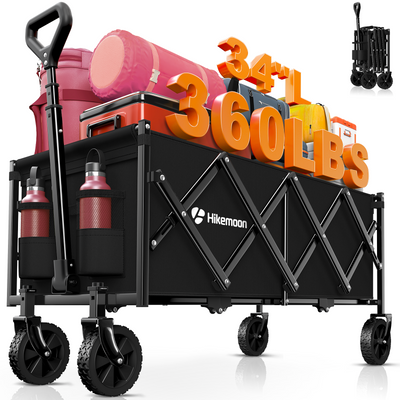
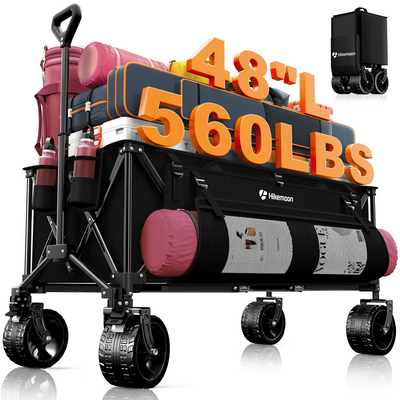
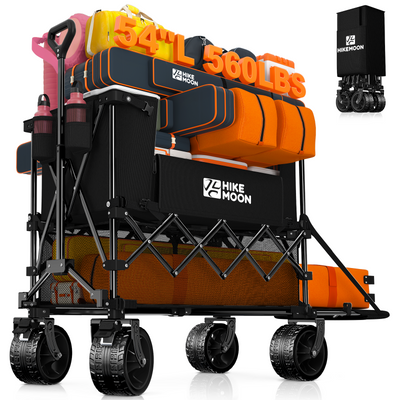
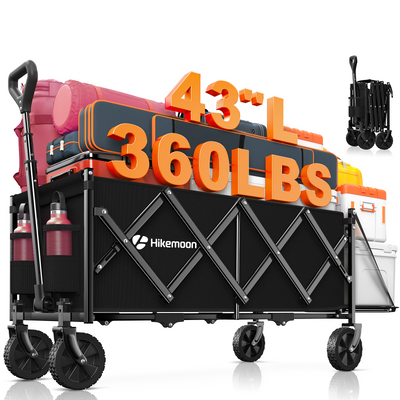


For sand, wheel width matters more than size alone. Wide wheels help reduce sinking, larger wheels roll better over uneven beach paths, and material affects grip. The best choice depends on sand softness, loaded weight, and how far you need to pull the wagon.
Why Sand Is Hard on Wagon Wheels
Sand is not a firm surface like pavement, concrete, or packed dirt. It shifts under pressure, so the wheel has to fight both rolling resistance and sinking. That is why a wagon can feel easy to pull in a parking lot but much harder once it reaches the beach.
Soft, wet, and packed sand
Soft dry sand is the hardest surface because it moves away from the wheel and allows narrow wheels to sink. Wet sand near the shoreline is usually firmer, so many wagon wheels roll more easily there. Packed sand on beach paths, boardwalk entrances, or hard access roads is easier still. The same folding wagon wheels can feel very different depending on which type of sand you cross.
Load weight and wheel sinking
The heavier the wagon, the more pressure each wheel puts on the sand. A lightly loaded wagon with towels and beach bags may roll well enough, while the same wagon loaded with a cooler, chairs, drinks, and umbrellas may start to drag. Weight distribution also matters. If most of the load sits toward one end, those wheels may sink deeper and make steering harder.
Wheel Width: The Most Important Factor for Sand
Wheel width is the first detail to check when choosing wagon wheels for sand. Diameter helps, but width is what gives the wheel more contact with the surface.

Wider wheels for soft sand
Wider wheels work better on soft sand because they spread the wagon’s weight across a larger area. This helps the wheel stay closer to the surface instead of cutting into the sand like a narrow edge. For beach trips that involve soft dry sand, wide wheels are usually more important than small differences in wheel height. Shoppers comparing wagon designs for sand, coolers, chairs, and beach gear can start with beach collapsible wagons before choosing a specific size or model.
Narrow folding wagon wheels for firm surfaces
Narrow folding wagon wheels can still work on firm ground. They are often fine for pavement, sidewalks, boardwalks, packed sand, and short walks across firmer beach areas. They become less useful when the sand is deep, loose, or dry. If your beach access is mostly paved and the sand walk is short, narrow wheels may be enough. If you regularly cross soft sand with heavy gear, they are more likely to struggle.
Wheel Size: What Diameter Works Best?
Wheel diameter affects how easily a wagon rolls over bumps, small dips, uneven paths, and loose ground. Bigger wheels can help, but they are not the whole answer.
Larger wheels for uneven sand and beach paths
Larger wheels can roll over small ridges, shells, gravel, and uneven beach paths more smoothly than very small wheels. They also make it easier to keep the wagon moving once it has momentum. For beach entrances, park paths, and mixed terrain, a larger wheel can improve handling, especially when the wagon is not overloaded.
Wheel size limits without enough width
A large wheel is not automatically a good sand wheel. If it is tall but narrow, it may still dig into soft sand under a heavy load. This is why shoppers should look at both diameter and width instead of judging by size alone. For sand, a balanced wheel design is better than simply choosing the biggest-looking wheel.
Wheel Material: Rubber, Plastic, PU, and EVA
Wheel material affects grip, feel, durability, and how the wagon handles different surfaces. No material is perfect for every beach condition, so it helps to match the wheel to the surface you use most.
Rubber wheels on beach surfaces
A folding wagon with rubber wheels can feel smoother on pavement, packed paths, and mixed outdoor surfaces. Rubber may offer better grip and a quieter ride than hard plastic, especially on concrete or boardwalks. On soft sand, however, the wheel’s width and shape still matter more than rubber alone. A narrow rubber wheel can still sink if the wagon is heavy.
Plastic and hard wheels on sand
Plastic or hard wheels are common on many basic wagons. They can roll well on hard surfaces, but they may bounce, slide, or dig in when the sand is loose. Hard wheels with a narrow profile are usually less comfortable for soft beach sand because they do not spread the load well. They may be acceptable for short beach access paths, but they are not ideal for long soft-sand walks.
Softer wheels and treaded surfaces
Softer wheels or treaded surfaces can help with grip and smoother movement on mixed terrain, but tread alone does not solve sinking. Deep tread may grip better on dirt, grass, or gravel, yet soft sand still requires enough wheel width. For beach use, look at the whole wheel design: width, diameter, material, tread, and how much weight the wagon will carry.
All Terrain Wagon Wheels vs Sand Wheels
Many shoppers assume all terrain wagon wheels are automatically good for sand. They can help in some beach conditions, but all-terrain does not always mean soft-sand ready.
Strengths of all terrain wagon wheels
All terrain wagon wheels are usually designed for mixed outdoor surfaces such as grass, gravel, packed dirt, pavement, and uneven park paths. They can be a good choice if your wagon moves between the parking lot, sidewalk, campsite, beach path, and firmer sand. For mixed beach access, grass, and gravel paths, the 220L Utility Foldable Collapsible Wagon Cart with Big All-Terrain Wheels is a relevant option because it uses 7" × 4" all-terrain wheels with 360° front rotation and brakes.

Limits of all terrain wheels in soft sand
Soft dry sand is more demanding than many other outdoor surfaces. Some all terrain wheels still struggle if they are too narrow or if the wagon is heavily loaded. If the main challenge is deep beach sand, choose wheels with enough width and a design made for softer surfaces. All-terrain performance is useful, but it should not be treated as a guarantee.
Match Wagon Wheels to Your Beach Load
The right wheel depends on what you actually carry. A wagon for two towels and a small bag does not need the same wheel setup as a wagon packed for a full family beach day.
Light beach bags and short walks
For light loads and short walks, standard folding wagon wheels may be enough. If you are only carrying towels, snacks, sunscreen, sandals, and a small beach bag, the wagon will not put as much pressure on the sand. In this case, wheel width is still helpful, but it may not be as critical as it is for heavier gear.
Coolers, chairs, and family beach gear
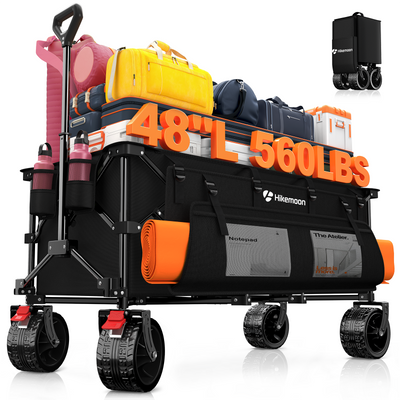
Coolers, folding chairs, umbrellas, toys, and drink packs add weight quickly. This is where wheel design becomes more important. Wider wagon wheels are better for keeping the load moving, and larger wheels can help across uneven paths or beach entrances. For family beach trips with coolers and chairs, the 300L Heavy-Duty Folding Beach Collapsible Wagon Cart is a better fit for larger beach loads because it is built for soft sand, offers 300L capacity, and supports up to 560 lbs.

Heavy loads and long soft-sand walks
Heavy loads and long walks across soft sand are the hardest combination. Even good wheels may feel difficult if the wagon is overloaded. Pack the heaviest items low and centered, avoid carrying more than the wagon is designed to handle, and choose a route with firmer sand when possible. For frequent soft-sand use, prioritize wide wheels and avoid narrow hard wheels.
What to Check Before Buying Wagon Wheels for Sand
Before buying a beach wagon or replacement wheels, check the wheel details instead of relying only on product photos. The words “beach,” “outdoor,” or “all terrain” are useful signals, but the actual wheel design matters more.
Wheel width
Check whether the wheels are wide enough for soft sand. Wider wheels usually perform better because they spread weight more effectively. If the product only shows wheel height but not width, look closely at the photos or specifications before assuming it is sand-friendly.
Wheel diameter
Wheel diameter affects how smoothly the wagon rolls over uneven beach paths, small ridges, shells, and bumps. Larger wheels can help with ground clearance and rolling comfort, but they should still have enough width for sand.
Wheel material
Review whether the wheels are rubber, plastic, PU, EVA, or another material. Rubber and softer materials may feel smoother on mixed surfaces, while harder wheels may be easier on pavement but less forgiving on soft sand. Material should be considered together with width and tread.
Loaded weight and balance
Think about the wagon after it is fully packed, not just when empty. A cooler, chairs, drinks, umbrellas, and bags can change how the wheels perform. Keep heavy items low and centered so one set of wheels does not sink more than the others.
Replacement wheel compatibility
Not every folding wagon can use replacement sand wheels. Axle size, wheel mounting style, brake design, frame clearance, and manufacturer support all matter. Before buying replacement wheels, confirm that they are compatible with the specific wagon model.
Common Mistakes When Choosing Folding Wagon Wheels
Most wheel problems come from choosing based on appearance instead of real use. A wheel that looks rugged in a product photo may still perform poorly if it does not match the sand and load.
Big wheels with narrow contact
One common mistake is choosing big wheels that are still too narrow. A tall narrow wheel may look strong, but it can still cut into soft sand when the wagon is loaded. For beach use, width and contact area should be considered before size alone.
Total loaded weight overlooked
Another mistake is judging the wagon while it is empty. Many wagons roll easily in a store, garage, or driveway, then become hard to pull after being packed with beach gear. Always think about the full loaded weight, not just the wagon’s frame or wheel style.
All terrain mistaken for sand ready
All terrain wagon wheels are useful, but they are not always made for deep sand. Some are better for grass, gravel, and hard outdoor paths than for soft beach areas. If sand is your main surface, check wheel width and beach performance rather than relying only on the all-terrain label.
Conclusion
The best wagon wheels for sand should be chosen by surface and load, not by wheel size alone. Soft dry sand needs more wheel contact, while packed sand and beach paths are easier to handle. Before buying, compare wheel width, diameter, material, loaded weight, and compatibility so the wagon matches how you actually use it at the beach.
FAQs
Are wider wagon wheels better for sand?
Yes. Wider wagon wheels usually perform better on soft sand because they spread the wagon’s weight across more surface area. This helps reduce sinking and makes the wagon easier to pull, especially when carrying coolers, chairs, or other beach gear.
What size wagon wheels work best on beach sand?
Larger wheels can help a wagon roll over shells, small ridges, uneven beach paths, and firmer sand. However, diameter alone is not enough for loose sand. A wheel that is both wide and reasonably large will usually perform better than a tall, narrow wheel.
Are rubber wheels good for sand?
Rubber wheels can feel smoother and quieter on pavement, boardwalks, and packed paths. They may also offer better grip than hard plastic on mixed surfaces. On soft sand, though, wheel width and shape matter more than rubber material alone.
Can I replace folding wagon wheels with sand wheels?
Sometimes, but not every folding wagon is designed for replacement wheels. Axle size, mounting style, brake design, wheel clearance, and frame structure all need to match. Before buying sand wheels separately, check the wagon model’s compatibility or the manufacturer’s replacement part guidance.
More reading: Beach Wagon vs All-Terrain Wagon: Which One Should You Choose?