
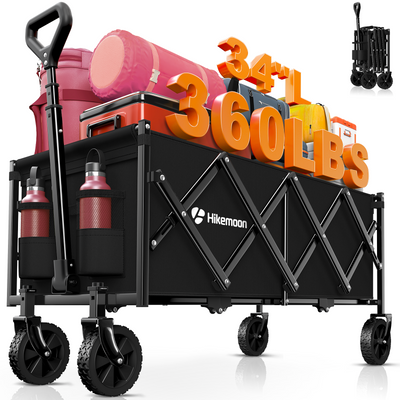
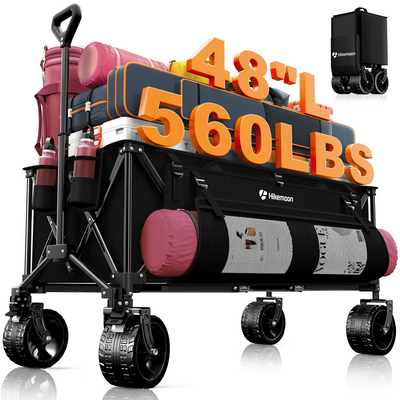
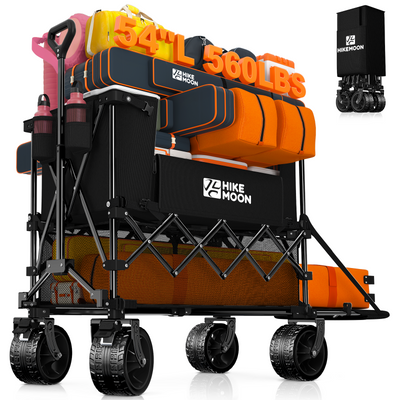
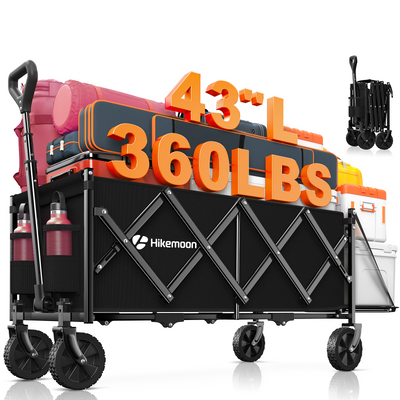
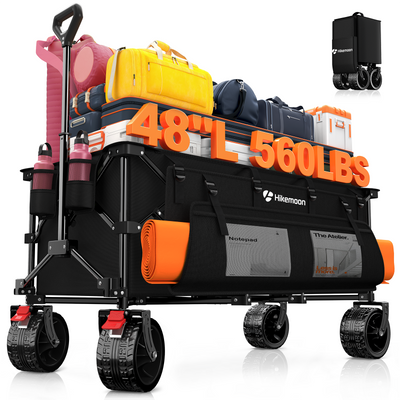

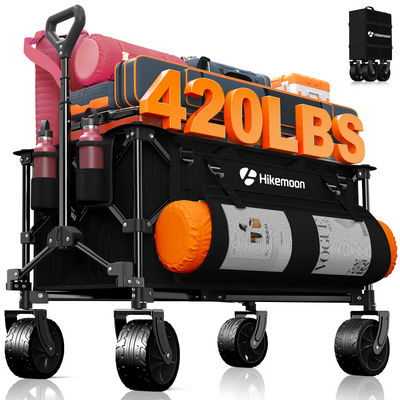

Hauling gear to the beach or through a campsite sounds simple until the wheels dig in and the load stops moving. Choosing between a beach wagon and an all-terrain wagon comes down to one question: where do you actually go? This guide covers what sets them apart and which one suits your needs.
What Is a Beach Wagon?
A day at the beach involves more gear than most people expect, and getting it from the parking lot to the shoreline is where the real effort begins. A beach wagon is built for exactly this. Its extra-wide flat wheels prevent sinking in soft sand, and the lightweight aluminum or rust-proof frame holds up against salt air and saltwater without corroding. The result is a wagon that makes coastal hauling feel effortless rather than exhausting.

What Is an All-Terrain Wagon?
Not every outing follows a straight, flat path. An all-terrain wagon is designed around the idea that the terrain will change and the wagon needs to keep up. Rubberized tread tires grip gravel, dirt, and wet grass, while large-diameter wheels roll over roots and uneven ground without stopping. A reinforced steel frame handles heavier loads and rougher conditions than a beach model is built to absorb. The trade-off is added weight, but for anyone moving between varied environments, that weight buys genuine versatility.

Beach Wagon vs All-Terrain Wagon
Performance on Sand, Grass, Gravel, and Pavement
On soft sand, wide plastic beach wheels outperform rubber tread tires. The larger contact area prevents the wheels from digging in, and the smooth surface does not collect sand the way tread grooves do. On gravel and pavement, the situation reverses. Rubber tires absorb surface irregularities and roll efficiently, while wide plastic wheels create more resistance on hard, uneven ground. On grass and packed dirt, both types perform adequately, though rubber tread provides better grip when the ground is wet.
Maneuverability on Uneven Ground
Beach wagons are stable on flat open surfaces but less agile when obstacles are involved. The wide wheel profile can catch on curbs, raised roots, or uneven pavement edges. All-terrain wagons handle these situations more confidently. Larger diameter tires roll over small obstacles rather than stopping at them, and some models feature a swiveling front axle that improves steering control on irregular paths.
Pulling Resistance Under Load
On sand, a Beach Wagon with wide flat wheels floats across the surface and requires less physical effort under a full load. On hard surfaces, a narrower rubber tire rolls more efficiently because it has less contact area creating friction against the ground. The effort required to pull either wagon increases with load weight, but choosing the type matched to your primary terrain keeps that effort at a manageable level.
Pros and Cons
|
Category |
Beach Wagon |
All-Terrain Wagon |
|
Terrain versatility |
Best on sand and flat surfaces |
Performs across mixed terrain |
|
Weight |
Lightweight, easy to carry |
Heavier due to reinforced frame |
|
Durability |
Corrosion-resistant for coastal use |
High structural durability on rough ground |
|
Ease of use on sand |
Excellent |
Moderate to poor |
|
Price |
Generally lower |
Generally higher |
|
Traction on gravel and trails |
Limited |
Strong |
Which One Fits Your Lifestyle?
The Coastal Enthusiast
For families with regular beach outings, shore fishing trips, or lakeside days, a beach wagon is the practical fit. Corrosion-resistant materials hold up through a full summer of saltwater exposure without requiring significant upkeep. A model like the 300L heavy-duty beach wagon is well suited to groups that need to move a large volume of gear in a single trip, from coolers and chairs to sand toys and towels.
The Multi-Surface Explorer
Campers, hikers, and outdoor adventurers who move between parking lots, trail access roads, and uneven campsites benefit most from an all-terrain design. For this group, the 220L Collapsible Wagon is a practical option for multi-surface use. It carries up to 460 lbs, opens to 37.40" x 24.21" x 24.00", and collapses down to 9.06" x 12.20" for trunk storage. The 7" x 4" all-terrain wheels with 360-degree front rotation handle the transition between trail access roads and uneven campsites without issue.

The Urban Utility User
City families, festival attendees, and park visitors typically deal with paved paths and firm grass rather than sand or gravel trails. Either wagon type can handle these surfaces adequately. For this group, the deciding factors are usually portability, storage convenience, and price rather than terrain-specific performance.
Features to Check Before Buying
Folding and Portability
A fold-flat mechanism that collapses the wagon into a profile compatible with a standard car trunk is one of the most practical features to confirm before buying. A quality foldable wagon should open and collapse without tools or excessive force, which matters when gear is already loaded into both hands.
Handle Comfort
A telescoping handle with adjustable height accommodates different users and reduces strain during longer hauls. Foam or rubber grip material makes a noticeable difference in comfort compared to bare plastic handles, particularly when pulling a fully loaded wagon across a long stretch of ground.

Capacity, Accessories, and Storage
Weight capacity ranges from around 150 pounds on lighter beach models to 300 pounds or more on heavy-duty designs. Beyond raw capacity, useful accessories include a removable canopy for sun protection, a cargo net to keep loose items in place, and built-in cup holders or zippered pockets for personal items.
Maintenance and Care
Removing Salt and Sand
After any beach outing, rinse the entire wagon with fresh water before salt residue dries on the frame or wheel components. Focus on wheel axles, frame joints, and any exposed metal hardware, as these areas are most vulnerable to corrosion. After rinsing, leave the wagon open to air-dry fully before folding it for storage.
Lubricating Moving Parts
Hinges, axle connections, and folding mechanisms benefit from lubrication every two to three months under regular use. A silicone-based lubricant or light machine oil applied to pivot points and wheel axles prevents metal-on-metal wear and keeps the folding action smooth. For wagons used near saltwater, increase the frequency to monthly to offset the added corrosive exposure.

Conclusion
For coastal use and soft sandy terrain, a beach wagon is the more efficient and practical choice. For mixed outdoor surfaces and varied conditions, an all-terrain wagon performs consistently where a beach model would fall short. Match the wagon to the terrain you use most often and the decision becomes straightforward.
FAQs
Can a beach wagon and an all-terrain wagon both be used year-round?
Both can be used year-round, but an all-terrain wagon adapts more reliably across seasons and weather conditions. A beach wagon performs best during warmer months when coastal use is frequent, and requires extra care if exposed to wet or muddy conditions outside of its intended environment.
Is a heavier wagon harder to fold and carry?
Not necessarily. Most folding mechanisms operate independently of frame weight, so a heavier all-terrain wagon can still fold and load into a trunk without much difficulty. The weight difference is most noticeable when carrying the folded wagon over a longer distance rather than during the folding process itself.
How often should I lubricate my all-terrain wagon?
Every two to three months is a practical baseline for regular use. If the wagon is used frequently on rough terrain or occasionally near saltwater, monthly lubrication better protects the moving components. Resistance or squeaking at the hinges and axle connections is a reliable sign that maintenance is needed.
What is the best way to store a folding wagon when not in use?
Fold the wagon flat and store it in a dry, covered location away from direct sun. UV exposure degrades fabric and plastic components over time. Before long-term storage, make sure the wagon is completely dry and apply a light coat of lubricant to metal joints to prevent rust during the storage period.
More reading: Beach Wagon Buying Guide