
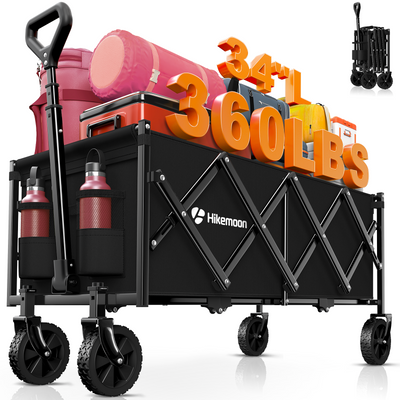
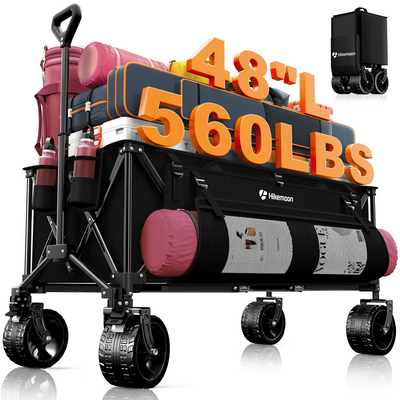
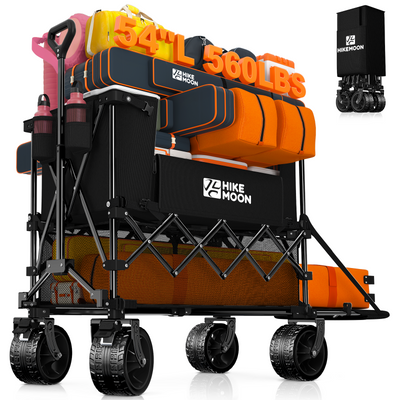
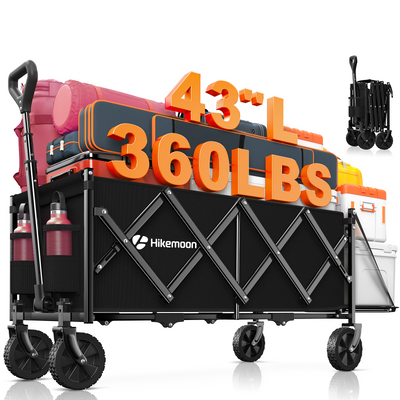
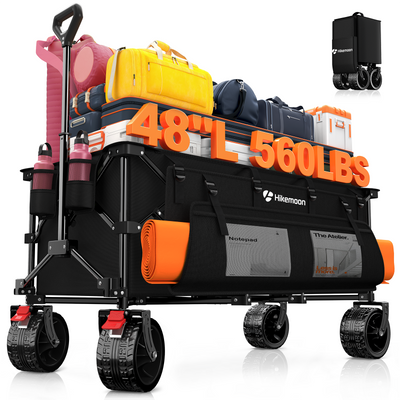

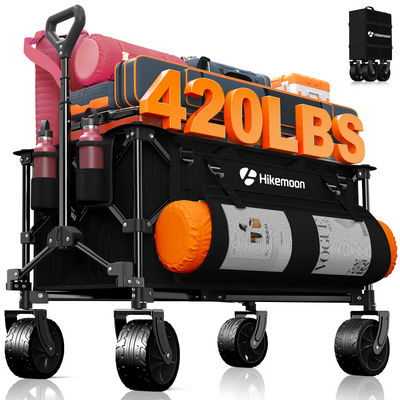

Before buying a beach wagon, check the features that affect real beach use: wheel design, load capacity, frame strength, folded size, handle comfort, and easy cleaning after sand or saltwater exposure. The right wagon should match your beach terrain, storage space, and the amount of gear you usually carry.

What to Check Before Buying a Beach Wagon
Start with the features that directly affect beach performance. A wagon may look spacious online, but it can still be difficult to pull if the wheels are too narrow, the frame is weak, or the folded size does not fit your car or storage space.
|
What to Check |
What to Look For |
Why It Matters |
|
Wheel Design |
Wide wheels, all-terrain wheels, or narrow plastic wheels |
Sand-friendly wide wheels are better for soft sand, while all-terrain wheels work well on packed sand, grass, gravel, pavement, and boardwalks. Narrow plastic wheels may sink into loose sand. |
|
Load Capacity |
Rated load limit and actual gear weight |
A higher load rating helps when carrying chairs, umbrellas, towels, bags, and heavier beach supplies. |
|
Frame Strength |
Steel, aluminum, or reinforced construction |
The frame affects strength, stability, rust resistance, and long term durability |
|
Fabric and Cleaning |
Tear resistant fabric, removable liner, and easy clean material |
Beach wagons often carry sandy gear, wet towels, toys, and outdoor supplies, so easy-clean fabric is important. |
When comparing beach wagons, focus first on terrain, load, and cleaning. Wide wheels are better for loose sand, while all-terrain wheels work well on packed sand, grass, gravel, pavement, and boardwalks. Easy-clean fabric also matters because beach wagons often carry sand, saltwater, and wet towels. For larger beach setups, a 300L heavy-duty beach wagon with a 21 lb frame, up to 330 lb load capacity, and 7" × 4" all-terrain wheels may be more practical than a small light-duty cart.
Check Portability and Storage Space
A beach wagon should not only carry gear well. It should also be easy to fold, lift, store, and fit into your car. A wagon that is too bulky when folded can become inconvenient, even if it performs well outdoors.
Folding Mechanism
A simple folding mechanism saves time when packing and unpacking. Look for a wagon that opens quickly and folds without complicated steps. This is especially useful when you are handling chairs, towels, beach bags, or multiple pieces of outdoor gear at the same time.
Before buying, check whether the wagon folds flat or collapses inward, and whether it needs extra straps or locks to stay folded. If beach use is your main concern, comparing dedicated beach wagons can help you focus on models designed for sand, shoreline gear, and outdoor storage.
Folded Dimensions
Folded size matters if you drive a small car, live in an apartment, or have limited garage space. For example, Hikemoon’s 300L model opens to 46.06" D × 22.64" W × 42.91" H and folds down to 8.7" L × 11.8" W × 29.5" H, so checking your trunk, closet, or storage area before buying is still important.

Handle Design
The handle affects control and comfort. A good handle should feel stable, allow easy pulling, and match your height. Adjustable handles are helpful because different users can pull the wagon without bending awkwardly.
Choose the Right Beach Wagon for Your Trip Type
The right beach wagon depends on how much you carry, how far you need to pull it, and where you plan to store it afterward. A compact wagon may work for light trips, while families or groups may need more capacity and stronger support.
|
Lifestyle |
Best Fit |
What to Prioritize |
|
The Minimalist |
A lightweight folding wagon for towels, snacks, sunscreen, and a few small bags |
Easy folding, light weight, simple cleaning, and compact storage |
|
The Family Hauler |
A larger beach wagon for towels, chairs, toys, umbrellas, drinks, and extra clothes |
Higher capacity, stronger wheels, durable fabric, and easy cleaning |
|
The Overpacker |
A large or heavy-duty beach wagon for chairs, shade gear, beach bags, and heavier outdoor supplies |
Weight capacity, frame strength, wheel stability, and interior space |
|
The Small-Car Owner |
A compact folding wagon that still offers practical carrying space |
Folded dimensions, trunk fit, handle design, and storage convenience |
If you want to compare different sizes and styles, browsing foldable wagon options can help you see what level of capacity fits your routine.

Common Buying Mistakes
Many buyers focus on appearance or price first. That can lead to problems once the wagon is used on soft sand, grass, pavement, or uneven outdoor paths.
Narrow Wheel Choice
Narrow wheels may roll well on pavement, but they can dig into soft sand. For loose sand, choose sand-friendly wide wheels. For packed sand, grass, gravel, parking lots, or boardwalks, all-terrain wheels are a better match.
Ignoring Folded Size
Some buyers choose a wagon based only on open capacity. This can become a problem when the wagon is too large to fit in a trunk, closet, or garage corner. Always check folded dimensions before buying. A beach wagon should be useful during the trip and manageable after the trip.
Neglecting Rust Resistance
Salt air, wet towels, sand, and humidity can cause low-quality metal parts to rust faster. Choose durable frame materials and dry the wagon before storage.
Choosing Unnecessary Features
Extra features such as cup holders, side pockets, brakes, tailgates, and oversized frames are useful only when they match your real needs. Otherwise, they can add weight, bulk, and cost.
Check Cleaning and Care Requirements
Before buying, consider how easy the wagon will be to clean and store after beach use. Sand, salt, and moisture can shorten its lifespan if they stay on the frame, wheels, and fabric.
Clean After Beach Use
After each beach trip, shake out loose sand and wipe down the fabric. Rinse the wheels if they picked up saltwater, mud, or heavy sand. Let the wagon dry before folding it for storage.Avoid storing the wagon while it is wet. Moisture trapped in fabric folds or wheel parts can lead to odor, mildew, or rust.
Lubrication Tips
If the wheels or folding joints begin to feel stiff, light lubrication may help. Focus on moving parts such as wheel axles, hinges, and folding points. Do not overapply lubricant, especially near fabric. Too much oil can attract sand and dirt, making the wagon harder to clean.
Storage Techniques
Store the wagon in a dry place away from direct sunlight when possible. Long exposure to sun can weaken fabric and fade colors over time. If you use your wagon frequently for beach trips, camping, picnics, and errands, choose a storage location that is easy to access. A wagon that is hard to reach is less likely to be used.

Conclusion
Before buying a beach wagon, check how much you usually carry, what terrain you use it on, and how much storage space you have at home or in your car. Wheel design, load capacity, frame strength, folded size, and fabric durability all affect real-world performance.
For light beach trips, a compact folding wagon may be enough. For family outings, chairs, shade gear, beach bags, and heavier supplies, a larger beach wagon with strong wheels and a durable frame is usually the better choice.
FAQs
Can a beach wagon roll on soft sand?
Yes, if it has sand-friendly wide wheels. Narrow hard wheels may sink into loose sand and become difficult to pull.
What is the best wheel type for a beach wagon?
For soft sand, choose sand-friendly wide wheels. For packed sand, grass, gravel, pavement, and boardwalks, all-terrain wheels are usually more practical.
What should I check before buying a beach wagon?
Check the wheel design, load capacity, folded size, frame strength, fabric quality, and handle comfort. These features affect how well the wagon works on sand and how easy it is to store after use.
How do I keep a beach wagon from rusting?
Clean and dry the wagon after each beach trip, especially if it contacts saltwater. Store it in a dry place and check metal joints, screws, and wheel axles regularly.