
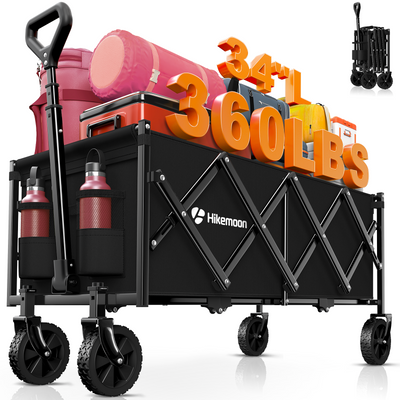
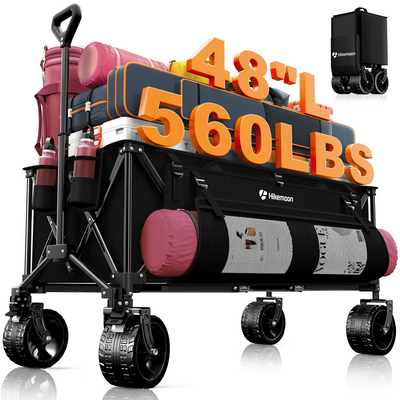
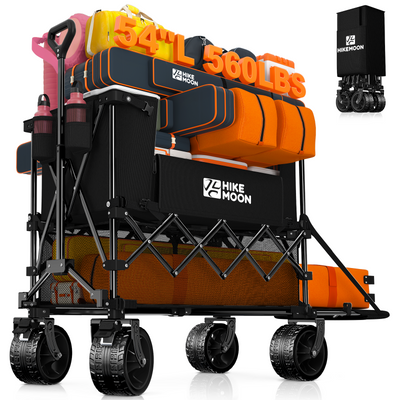
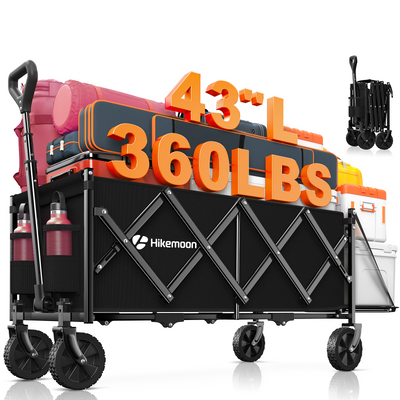
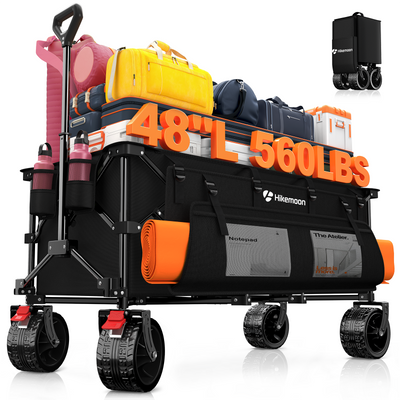

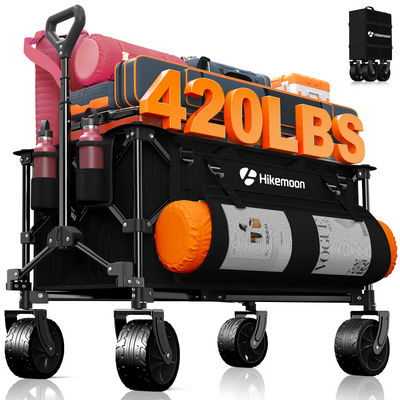

A folding wagon can make or break your campsite setup. The difference between two trips and six back-and-forth runs to the car often comes down to having the right wagon for the terrain and the load. This guide covers what matters most so you can find the one that fits how you camp.
Hardware Specs That Determine Performance
Weight Capacity and Frame Durability
Weight capacity is the most practical number to check before buying. For solo campers, 150 to 200 lbs covers most needs. For families hauling coolers, firewood, and gear in a single trip, 300 lbs or more is a safer starting point. Steel frames offer the highest structural strength but add weight, while aluminum frames are lighter and naturally corrosion resistant, making them better suited for campers who frequently set up near water.
Wheel Design and Terrain Performance
Larger or wider wheels with tread usually handle roots, gravel, wet grass, and uneven ground better than narrow smooth wheels. For camping, wheel width, tread pattern, front-wheel rotation, and bearing design often matter as much as diameter. Rubber tread tires provide grip on loose gravel and wet grass where smooth wheels would slide. Wider wheels help on soft ground like sand or loose soil, and a 360-degree swivel on the front wheels improves maneuverability when navigating tight paths at a campsite.
Fabric Quality and Weather Resistance
Oxford cloth is the most common material in quality wagons and offers a good balance of durability and water resistance. Thicker fabric weights hold up better against sharp gear and repeated loading. Reinforced stitching at the corners and base is worth checking, as these are where cheaper fabrics tend to fail first. A removable liner makes post-trip cleaning easier and extends the life of the wagon bed.

Hardware Specs Comparison
|
Spec |
Entry Level |
Mid Range |
Heavy Duty |
|
Weight Capacity |
Up to 150 lbs |
150 to 300 lbs |
300 lbs and above |
|
Wheel Diameter |
Under 7 inches |
7 to 10 inches |
Wide all-terrain wheels with tread and stable front rotation |
|
Frame Material |
Basic steel |
Aluminum alloy |
Reinforced steel |
|
Fabric Material |
Standard polyester |
Oxford cloth |
Heavy Oxford cloth |
|
Weather Resistance |
Limited |
Moderate |
High |
Usability Features That Matter in the Field
Folding Mechanism and Storage Dimensions
A wagon that takes too long to set up or collapse is one you will eventually stop bringing. The best folding mechanisms operate with a single pull cord and require no tools. The 220L model, for example, folds down to 9.06" x 12.20", compact enough to fit in most car trunks alongside the rest of your camping gear. Checking the folded dimensions of any model against your available trunk space before purchasing saves a frustrating discovery at the trailhead.
Handle Ergonomics
A telescoping handle that adjusts to different heights reduces strain when pulling across uneven terrain. Foam or rubber grips reduce hand fatigue compared to bare plastic handles. Some models in the Folding Outdoor Wagon range include a rebound handle function that keeps the handle upright when released, which avoids having to bend down to retrieve it.

Integrated Accessories
Useful accessories that come included with the wagon add real value to the overall package. The most practical additions to look for are:
-
A removable canopy or sun shade for exposed campsites
-
Side pockets or an oxford side bag for small personal items
-
Two or more cup holders for drinks during long hauls
-
A cargo net or bungee cover to secure loose items
-
Dual front brakes to hold the wagon in place on slopes
Choosing by Camping Style
Minimalist Campers
For campers who travel light, a compact wagon with a modest capacity around 150 lbs covers the essentials without adding unnecessary bulk. Low folded weight and dimensions that fit easily into a small vehicle are the priorities here.
Family Base Camps
Families setting up a base camp need significantly more hauling capacity. A 300L large foldable wagon like the 300L model supports up to 330 lbs, opens to 46.06" x 22.64", and folds down to 8.7" x 11.8" for easy trunk storage. At 21 lbs, it is light enough to handle without difficulty while still carrying the combined weight of coolers, chairs, tents, and cooking gear in a single trip.

Rugged Explorers
Campers who move through demanding terrain need a wagon built around wheel performance and structural durability. The 220L Collapsible Wagon fits this profile with a static capacity of 460 lbs and a dynamic capacity of 330 lbs, 7 by 4 inch all-terrain wheels with 360-degree front rotation, and a folded size of 9.06" x 12.20" that fits in most car trunks alongside other gear. At 23.1 lbs, it is heavy enough to handle demanding conditions without being impractical to transport.

Campsite Utility
Hauling and Organizing Gear
A wagon with sufficient capacity handles tents, sleeping bags, a cooler, and camp chairs all at once. Loading heavier items at the base keeps the center of gravity low on uneven ground. Once at the campsite, the wagon works as a portable organizer for frequently accessed items and a drop point for wet gear and muddy footwear at the end of the day.
Setting Up a Mobile Workspace
A wagon positioned near the camp kitchen keeps cooking fuel, utensils, and food within easy reach. For longer stays, parking it near the fire area holds firewood off the ground where it would otherwise collect moisture. These secondary uses make a good wagon one of the more versatile pieces of gear at any campsite.
Maintenance and Care
Cleaning After Each Trip
Empty and shake out the wagon bed, then rinse the frame and wheels with clean water. Use a mild soap and soft brush on the fabric liner for stubborn stains. Leave the wagon fully open to air dry before folding, as trapping moisture inside the frame leads to rust on metal components and mildew on fabric over time.
Joint Lubrication and Proper Storage
Apply a silicone-based lubricant or light machine oil to folding joints, wheel axles, and hinge points every two to three months. For storage, keep the wagon folded flat in a dry location away from direct sunlight. Hikemoon wagons include an oxford storage bag that keeps the folded wagon clean and protected between uses.

Conclusion
Choosing the right folding wagon comes down to matching specs to the way you camp. Focus on weight capacity, wheel performance, and folded dimensions as the core criteria, then use your camping style as the final filter to find the right model.
FAQs
Can I use a folding wagon on uneven or rocky terrain?
Yes, but performance depends on wheel design. Wider all-terrain wheels, treaded tires, stable front rotation, and a reinforced frame help a wagon move more smoothly over roots, stones, gravel, and wet grass.
How long does a quality camping wagon typically last?
A well-maintained camping wagon can last for several seasons under regular use. Frame quality, fabric durability, cleaning habits, and storage conditions usually affect lifespan more than trip frequency alone.
Is it worth spending more on a heavy-duty wagon for occasional camping?
It depends on terrain and load rather than frequency. If your campsites involve uneven ground or heavy gear, a heavy-duty wagon justifies the cost even for occasional use. For flat terrain with light loads, a mid-range model performs adequately and the price difference does not translate into a meaningful performance gain.
Can a folding wagon replace a camping backpack for short hikes?
Not on most trail surfaces. A wagon works well on packed dirt and gravel access roads but is not practical on narrow or steep hiking trails. The most effective approach is to use the wagon to move gear from the car to the campsite, then switch to a pack for any trail section that requires it.