
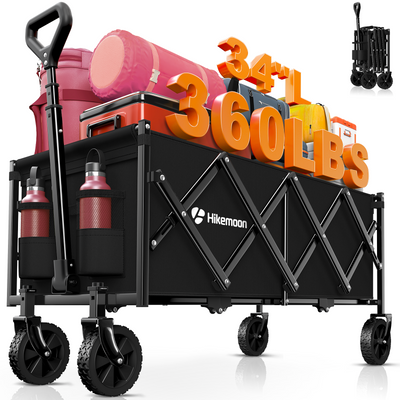
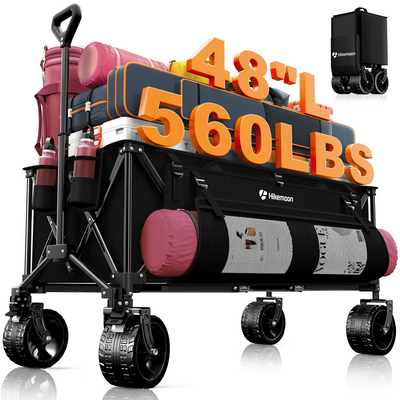
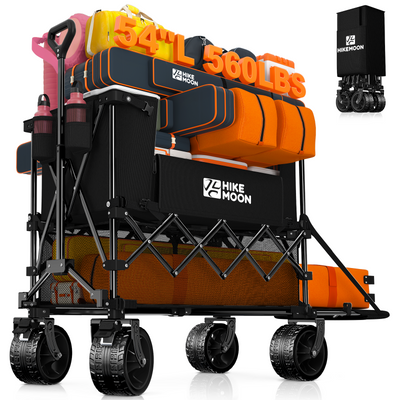
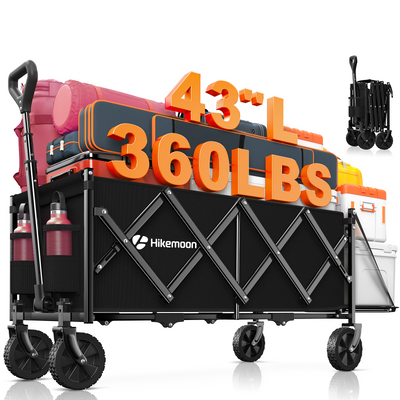


The right game day wagon comes down to capacity, wheel type, and trunk fit. Get those three right and everything else falls into place. This guide walks you through what actually matters, what you can skip, and how to match a wagon to your specific setup and budget.
Why Game Day Packing Is Harder Than It Looks
A typical Saturday at the soccer field involves more than just a ball and a water bottle. By the time you factor in folding chairs, a cooler, a bag of gear, snacks, extra layers, and a kid who stopped walking ten minutes ago, you are looking at a serious load. Most parents try to manage it by hand the first few times before realizing there has to be a better way. A wagon does not just make the walk easier. It changes how the whole morning goes.

What to Look for in a Sporting Event Wagon
Capacity and Storage Layout
For a typical family of four at a full-day event, you want at least 150 liters of usable space. The shape matters as much as the number. A wide, flat base fits folding chairs and a cooler side by side without stacking. Look for a model with at least one exterior pocket for things you reach for often, like sunscreen, keys, or a phone.
Wheel Type and Ground Performance
This is the spec that makes the biggest real-world difference. Standard small wheels work fine on smooth pavement but drag on grass and get stuck on gravel. Larger wheels with a wider base roll over uneven ground with noticeably less effort. If your games are mostly on natural grass or a mix of surfaces, a sports wagon with larger wheels will save you a lot of effort compared to a standard model.
Weight Limit and Frame Stability
Most utility wagons list a weight capacity somewhere between 150 and 300 pounds. For gear-only use, the lower end is usually fine. If you plan to have a child riding along, check whether the wagon is specifically rated for passenger use and factor in the combined weight of the child and everything else in the wagon. A steel or aluminum frame holds up better over a full season of regular use than a plastic-heavy build.
Folded Size and Car Fit
Measure your trunk before you buy. A wagon that folds down to 32 by 18 inches fits most midsize SUVs and crossovers without removing anything else. Compact sedans and smaller vehicles may need a slimmer fold profile. Most product listings include folded dimensions, but they are easy to overlook until you are standing in a parking lot trying to make it fit.
Do You Need Your Kids to Ride in It Too?
If the answer is yes, that changes what you are shopping for. A standard utility wagon is built for cargo, and most are not designed or certified for child passengers. If you want a wagon that safely carries both gear and kids, look specifically for models with a built-in harness or safety belt system and explicit manufacturer language confirming child riding use.
Features That Are Actually Worth Paying For
All-Terrain Wheels
Larger wheels with a deeper tread make a noticeable difference on grass, gravel, and uneven ground. They require less pulling force and are far less likely to get stuck mid-walk. If you are regularly crossing a parking lot, a grassy embankment, and a packed sideline in the same trip, this feature earns its cost.

A Brake System
A brake matters most when you stop on any surface that is not perfectly flat. Sidelines, fields, and park paths are rarely level. Without a brake, a loaded wagon will roll the moment you let go of the handle. A simple foot-operated lock solves this completely and is worth prioritizing even if it adds a small amount to the price.
Adjustable Handle Height
This one is easy to overlook until you spend two hours hunched over a handle that hits you at hip height. An adjustable handle that reaches somewhere between waist and chest level makes a real difference over a long day. If you and your partner are at different heights, it matters even more.
Features You Can Skip
These features show up often in product listings but rarely justify a higher price for game day use:
-
Removable canopy: adds bulk and rarely gets used after the first few outings
-
Built-in cup holders: a small clip-on version does the same job for a fraction of the cost
-
Padded seats: only relevant if kids are riding, and even then it is a comfort upgrade rather than a necessity
-
Wagon covers and rain shields: easy to find as cheap accessories, so do not let their absence rule out an otherwise solid option
How to Pick the Right Size for Your Setup
Start with the number of people in your group and the typical gear load for one event. A solo parent with one child needs far less space than two parents managing equipment for three kids in different sports. If your events are shorter and mostly local, a compact wagon in the 100 to 150 liter range is easier to load and unload quickly. For full-day tournaments or multi-sport households, a large foldable wagon pays off. The one mistake most people make is buying too small and wishing they had more room within the first few uses.
What to Expect at Different Price Points
|
Price Range |
What You Get |
|
Under $100 |
Functional for light loads on smooth ground. Adequate for occasional use but shows wear faster with regular weekly use. |
|
$100 to $200 |
Better wheel quality, stronger frames, and more thoughtful storage. The sweet spot for families attending games most weekends through a season. |
|
Above $200 |
All-terrain wheels, heavier-duty construction, adjustable handles, and integrated brakes. Worth the cost for year-round use across multiple sports and activities. |
A Wagon Worth Considering for Game Days
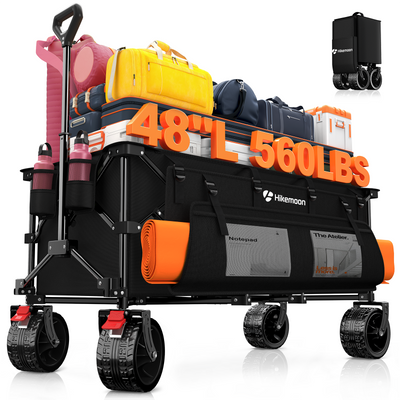
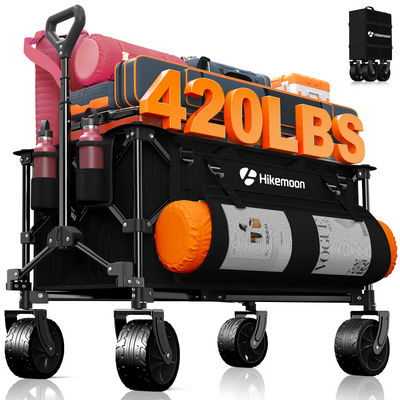
If you want a wagon built for the kind of mixed terrain that comes with game days, the Hikemoon 220L outdoor wagon is worth a look. It carries up to 220 liters, rolls on large all-terrain wheels, and folds flat for trunk storage. It handles grass, gravel, and pavement without the drag that smaller-wheeled models struggle with. For families doing this every weekend through a sports season, that kind of everyday reliability adds up.

Conclusion
Most people overthink wagon features and underthink wheel size and trunk fit. Start with those two, match the capacity to your actual gear load, and you will land on the right option faster than any spec comparison will get you there. A wagon that works reliably every weekend is worth far more than one with features you never use.
FAQs
Can one wagon handle both gear and kids?
It depends on the wagon. Most utility wagons are not rated for child passengers even if there is technically room. Look for a model that explicitly states it supports child riding and includes a safety belt or harness. If the specs do not mention it, assume it is for gear only.
How many folding chairs fit in a standard sporting event wagon?
Most wagons in the 150 to 220 liter range fit two standard folding camp chairs alongside a small cooler and a bag of gear. If you regularly bring four chairs, look for a wider base model or a 300 liter option. Chairs with a compact fold profile take up noticeably less room than oversized ones.
Can I use the same wagon for the beach and game days?
Yes, with one caveat. Sand gets into wheel bearings and fabric seams and is harder to clean out than grass or mud. If you use the same wagon for both, rinse the wheels and underframe thoroughly after each beach trip. A model with sealed wheel bearings holds up better under repeated sand exposure.
How do I clean a wagon after a muddy game day?
Most fabric wagon beds can be wiped down with a damp cloth for light dirt. For heavier mud, remove the fabric liner if it is detachable and rinse it with a hose. Let it air dry completely before folding to prevent mildew. For the frame and wheels, a quick rinse with water and a stiff brush clears most debris from the wheel treads.
More reading: What Size Folding Wagon Do You Need?