
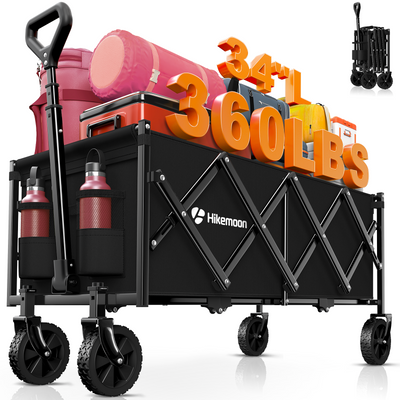
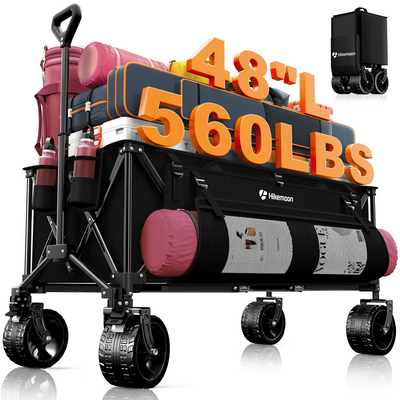
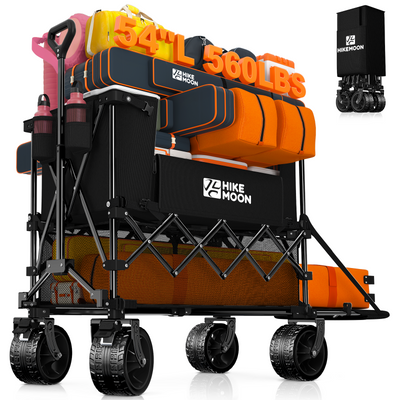
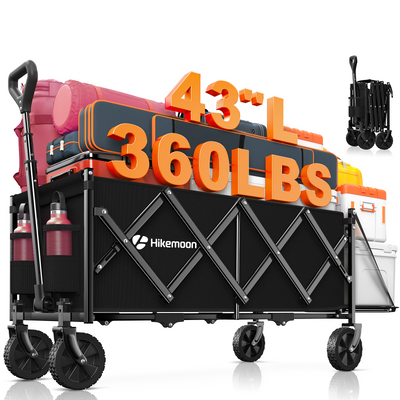
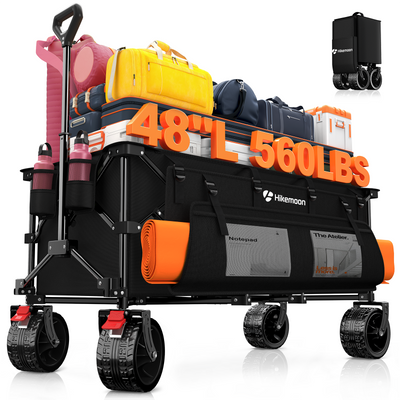

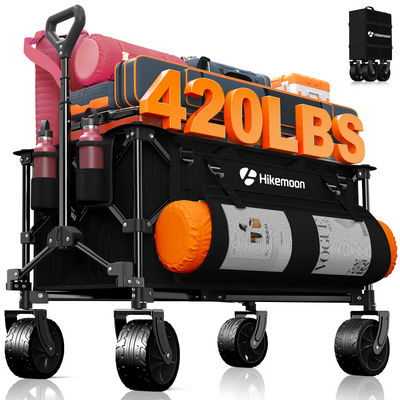

The short answer is: it depends on the wagon. Some foldable wagons are built with child riders in mind and include harnesses, stable frames, and certified safety ratings. Most utility wagons are not. This guide covers how to tell the difference, what age is appropriate, which situations to avoid, and how to use a wagon safely on family outings.
Can Kids Ride in a Foldable Wagon?
When It May Be Okay
Some foldable wagons are specifically designed with child riders in mind. These models come with safety belts, reinforced frames, padded seating, and weight ratings that account for active passengers. If the manufacturer explicitly states that the wagon supports child riding and the product includes the right safety features, it can be a reasonable option for short trips on flat ground.
When It Is Not Recommended
A standard utility wagon is designed around static loads like coolers and bags, not active passengers. Even if the weight limit seems high enough, the lack of a restraint system means a child can shift, lean, or tumble out without warning. Using a utility wagon as an impromptu seat for a young child is one of the more common causes of minor injuries at outdoor events.
What Is the Difference Between a Foldable Wagon and a Stroller Wagon?

Foldable Utility Wagon
A collapsible wagon is designed to haul gear. It typically has a large open bed, fabric or mesh sides, and a weight capacity built around cargo rather than passengers. There are no seat belts, no padded seats, and no safety certifications for carrying children.
Stroller Wagon
A stroller wagon looks similar but is engineered differently. It has built-in harnesses, reinforced seating areas, canopy options, and meets safety standards for carrying children. These wagons are tested as child transport products, not just cargo carriers.
Why Space and Weight Capacity Are Not Enough
A wagon can have a 150-pound capacity and still be completely unsuitable for a child rider. Capacity refers to structural load tolerance, not passenger safety. Without a harness to keep a child in place and a frame designed to stay stable under shifting weight, a high capacity number does not make a wagon safe for kids.
What Should Parents Check First?
Before putting a child in any wagon, run through these four items:
-
Child riding approval: The product listing or manual should explicitly state that the wagon is approved for child riding. Phrases like "fits two kids" in a marketing description are not the same as a certified safety rating.
-
Safety belts: Look for a functioning harness or safety belt for each rider. A lap belt is the minimum, and a five-point harness offers better protection for younger children who are less able to hold themselves steady.
-
Brakes and stable frame: A braking system prevents the wagon from rolling on uneven ground. A wide, stable base reduces the risk of tipping when a child shifts their weight unexpectedly.
-
Age and weight limits: Check the manufacturer's specific age and weight limits, not just the general weight capacity. Some child-rated wagons still have minimum age requirements that rule out infants or young toddlers.
What Age Can Kids Ride in a Wagon?
Age, neck strength, and the ability to hold a seated position all affect whether wagon riding is appropriate for a child. The table below gives a general overview, though the specific wagon's guidelines always take priority.
|
Age Group |
General Guidance |
|
Babies (under 12 months) |
Not recommended in most wagons. Infants lack the neck and core strength to stay upright. A stroller or infant carrier is the appropriate choice. |
|
Toddlers (1 to 3 years) |
Only appropriate in stroller wagons with a full harness. Adult supervision required at all times. Limit use to flat, smooth surfaces. |
|
Older Kids (4 years and up) |
May ride in approved wagons with a lap belt on flat terrain. More capable of following instructions and holding a stable position. |
Can a Regular Foldable Wagon Replace a Stroller?
For most families, no. A regular foldable wagon is not a stroller replacement. It does not have the restraint system, recline options, or infant safety features that a stroller provides. Some stroller wagons do serve as a functional alternative for toddlers and older children on outings, but they are a distinct product category designed specifically for that purpose.
Common Safety Concerns for Parents
Can Kids Fall Out?
Yes, and it happens more often than parents expect. Children shift their weight, lean over the sides, or stand up when they get excited. Without a harness to keep them in place, a sudden movement can send a child over the edge before a parent can react.
Can a Wagon Tip Over?
A wagon with a high center of gravity and a narrow base can tip when a child leans hard to one side or when one wheel hits a root or crack in the path. Wider-base wagons are more stable, but no wagon is completely tip-proof when carrying an active child.
Can Folding Parts Pinch Kids?
The folding mechanism on most utility wagons is designed for adult handling, not child safety. Fingers and hands can get caught in hinges during setup and takedown. Keep children away from the wagon while folding or unfolding it, and inspect the folding points regularly for wear.

When Should Kids Not Ride in a Wagon?
On Hills
Even a moderate slope gives a wagon enough momentum to become hard to control. If a parent loses their grip or stumbles, there is nothing stopping the wagon from rolling. Hills are not the place to have a child riding in any wagon, regardless of how well it is designed.
In Parking Lots or Near Roads
Parking lots have unpredictable vehicle traffic, uneven pavement, and tight spaces with limited visibility. A wagon with a child inside needs clear, open ground and full adult attention. Neither is reliable near roads or in busy lots.
On Rough or Uneven Ground
Roots, gravel, cracked pavement, and uneven grass all increase the chance of a wheel catching and the wagon jolting or tipping. If you regularly navigate mixed terrain, an all-terrain wagon with larger wheels handles those surfaces more smoothly, but it is still not a substitute for choosing safer ground when a child is riding.
Without Adult Supervision
A wagon with a child inside should never be left unattended, even when it is stopped on flat ground. Children can stand up, rock the wagon, or attempt to climb out at any moment.
How to Use a Wagon More Safely
Keep Kids Seated
Establish a clear rule before the ride starts: stay seated with hands inside the wagon. Reinforce it consistently. Standing or leaning over the sides while the wagon is moving is the most direct path to a fall.
Place Heavy Items Low and Centered
If you are mixing gear and children in a larger wagon, keep heavier items flat on the floor and centered. Weight that is stacked high or pushed to one side makes the wagon harder to pull and easier to tip.
Do Not Exceed the Weight Limit
The weight limit applies to the total load in the wagon, including children and any gear loaded alongside them. Exceeding it stresses the frame, affects handling, and reduces the reliability of the braking system.
Use the Brakes When Stopped
Any time you stop on a surface that is not completely flat, engage the brakes before letting go of the handle. A loaded wagon on a slight incline can roll faster than it looks like it will.
What Is a Regular Foldable Wagon Better For?

Beach Gear
A foldable wagon handles sand better than most other carrying options and fits enough towels, chairs, a cooler, and a bag for the whole family without requiring multiple trips from the car.
Picnic Supplies
A full picnic setup, including a blanket, food containers, a portable speaker, and a bag of gear, fits cleanly in most standard outdoor utility wagons. The fold-flat design makes it easy to store in a trunk when it is not in use.
Camping and Park Items
Tents, sleeping bags, firewood, and camp kitchen supplies are exactly the kind of loads a utility wagon handles well. It takes the weight without the awkward carrying that comes with loaded backpacks or multiple hand trips.
Should You Choose a Collapsible Wagon for Kids or a Utility Wagon?
Choose a Stroller Wagon for Frequent Child Riding
If your main goal is transporting children at events, parks, or on longer outings, a stroller wagon with a proper harness and certified child safety features is worth the investment. It is designed for that specific use and gives you meaningful protection that a utility wagon simply cannot offer.
Choose a Utility Wagon for Carrying Gear
If you are primarily hauling equipment and only occasionally want a child to sit in the wagon on flat ground under close supervision, a high-quality utility wagon handles that role well. Just be realistic about its limitations and never treat it as a substitute for child-rated transport gear.

Conclusion
A foldable wagon can be a practical and enjoyable part of family outings when used appropriately. The key is understanding what a specific wagon was designed to do. Utility wagons are built for gear. Stroller wagons are built for kids. Using the right one for the right purpose is the simplest way to keep everyone safe and make the trip easier for everyone involved.
FAQs
How can parents tell if a wagon is not made for child riding?
Look for a harness or safety belt system. If there is none, the wagon is not rated for child passengers. Also check the product description for explicit child riding approval. Vague language about capacity or size is not the same as a manufacturer-issued child transport rating.
What should parents do if the wagon manual is unclear?
Contact the manufacturer directly and ask whether the wagon is approved for child riding. If they cannot give a clear answer, treat it as a cargo-only wagon. When it comes to child safety, ambiguity is not a reason to proceed.
Is pushing safer than pulling a wagon with kids inside?
Pulling is generally the standard method and keeps the wagon in front of the adult where it is easier to monitor. Pushing can work on flat ground but reduces visibility of the children inside. Either way, the adult should maintain a firm grip on the handle at all times.
Can kids sit in a wagon while it is parked?
Yes, as long as an adult is present, the wagon is on flat ground, and the brakes are engaged. Even parked, children should stay seated and not attempt to rock or stand in the wagon.
More reading: Beach Wagon vs All-Terrain Wagon: Which One Should You Choose?