
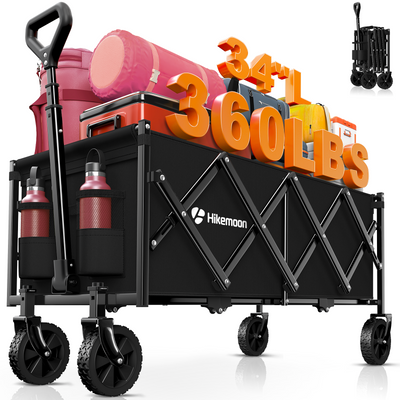
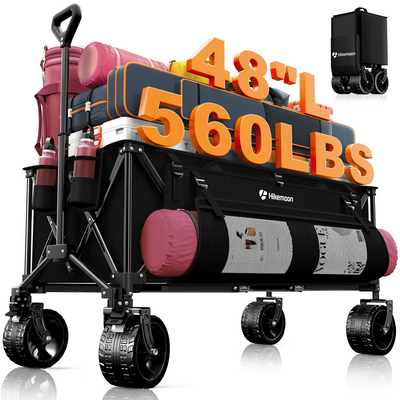
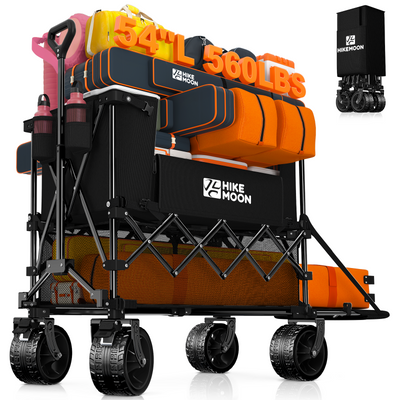
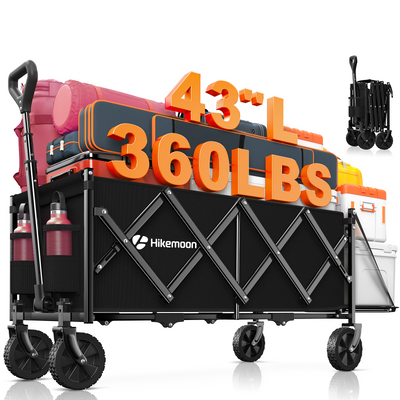
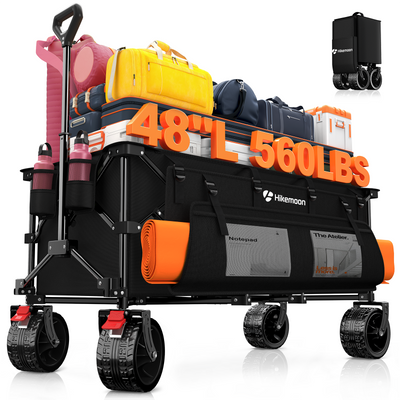

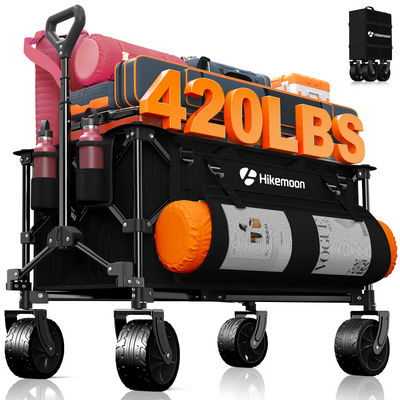

A folding wagon can usually handle everyday loads such as groceries, laundry, packages, coolers, sports gear, and outdoor supplies, but the exact weight limit depends on the model. A light folding wagon may be enough for simple errands, while a heavy-duty folding wagon is better for larger loads, rougher terrain, or repeated outdoor use. The listed weight capacity is only one part of the decision. You also need to understand whether the number refers to static load or dynamic load, how the wagon will be used, what type of ground it will roll across, and whether the load will stay balanced while moving.
How Much Weight Can a Folding Wagon Usually Hold?
There is no single weight limit for every folding wagon. Some models are built for light daily use, while others are designed for larger outdoor loads. The best way to judge a wagon is to check the manufacturer’s listed capacity and match it with your real use case.
Light, Medium, and Heavy-Duty Folding Wagons
Light folding wagons are better for quick errands, small grocery runs, laundry, and simple household tasks. Medium-capacity wagons can handle groceries, packages, sports gear, picnic supplies, and small outdoor loads. Heavy-duty folding wagons are better for camping gear, beach equipment, gardening supplies, coolers, drink packs, and bulkier household items, but they may also be larger, heavier, and harder to store.
Why the Exact Weight Limit Depends on the Model
A folding wagon’s weight limit depends on the frame, fabric, wheel design, bottom support, handle structure, and folding joints. Two wagons may look similar but perform differently when loaded, so it is important to compare the listed specifications instead of judging by size or appearance alone.
Static Load vs Dynamic Load: Which Number Matters More?
Weight capacity can be confusing because some folding wagons list both static load and dynamic load. For daily use, dynamic load usually matters more because the wagon needs to move, turn, and stay stable while loaded.
What Static Load Means
Static load refers to the weight a wagon can support when it is not moving. This number can show the strength of the structure, but it does not always reflect real use because pulling, turning, stopping, and moving over uneven ground create extra stress.
What Dynamic Load Means
Dynamic load refers to the weight a wagon can handle while moving. This number is closer to daily use because a loaded wagon needs to roll, turn, and stay stable across different surfaces, especially when the load shifts during movement.
Why Dynamic Load Is More Useful for Daily Use
If you plan to use the wagon for groceries, camping, gardening, beach trips, sports events, or apartment errands, dynamic load is the number to pay closer attention to. A high static load may look impressive, but the wagon still needs to roll smoothly, turn safely, and stay stable when loaded.
For example, the 220L Utility Foldable Collapsible Wagon Cart with Big All-Terrain Wheels lists a static load capacity of 460 lbs and a dynamic load capacity of 330 lbs. This is why both numbers matter: the higher static number reflects support while the wagon is not moving, while the lower dynamic number is more relevant for grocery runs, outdoor errands, parking lots, sidewalks, and uneven ground.
Weight Capacity vs Volume Capacity: What Is the Difference?
Weight capacity and volume capacity are not the same thing. This is one of the most common points of confusion when choosing a folding wagon.
Weight capacity tells you how many pounds the wagon can support. Volume capacity tells you how much space the wagon provides. A large wagon can hold bulky items, but that does not always mean it should carry very heavy items.
When comparing folding wagon sizes, treat liters as space, not strength. A larger cargo area can hold bulkier items, but the listed weight capacity still determines how much load the wagon should carry.
What Pounds Tell You
Pounds tell you how much weight the wagon is designed to carry. This matters for dense items such as bottled water, canned food, garden soil, mulch, tools, pet food, drink packs, and filled coolers.
What Liters Tell You
Liters tell you how much space the wagon provides. This matters for bulky but lighter items, such as towels, blankets, folding chairs, jackets, sports gear, picnic supplies, beach toys, and camping bags.
Why a Larger Wagon Does Not Always Mean a Higher Weight Limit
A larger wagon may give you more room, but it does not automatically mean it can carry more weight. A wagon with a large cargo bed may be good for chairs and blankets, while a smaller heavy-duty wagon may be better for dense items like soil bags or bottled drinks.
What Affects a Folding Wagon’s Real Weight Capacity?
The listed capacity gives you a starting point, but real use depends on several factors. The same load can feel manageable on smooth pavement and difficult on grass, gravel, sand, or slopes. Before choosing a folding wagon, think about the items you carry, the ground you travel over, and whether you need to lift the wagon into a car or store it in a small space.

Frame Strength and Bottom Support
The frame carries much of the load, so frame strength matters for heavier items, frequent use, and outdoor hauling. Bottom support is also important because heavy items can press down into the fabric if the base is weak or uneven.
Wheel Size, Wheel Width, and Terrain
Wheels affect how a loaded wagon feels in real use. Small wheels may work on smooth floors or paved sidewalks, while larger or wider wheels are usually better for grass, gravel, rough paths, and uneven ground. On soft beach surfaces, the right wagon wheels for sand need enough width to reduce sinking when the wagon is loaded.
Weight Distribution and Load Balance
A wagon can feel unstable if the load is uneven. Heavy items should sit low and near the center, while lighter items can go on top so the wagon stays easier to pull, steer, and turn.
How Much Weight Capacity Do You Need for Common Uses?
The right capacity depends on how you use the wagon. A person using a wagon for apartment groceries has different needs from someone hauling gardening supplies or camping gear.
Instead of choosing the highest number possible, choose a capacity that fits your regular load while still leaving room for safe handling.
|
Common Use |
What to Focus On |
|
Groceries and laundry |
Medium capacity, easy steering, compact storage |
|
Packages and household errands |
Stable base, open cargo space, easy folding |
|
Camping and beach gear |
Larger capacity, stronger frame, better wheels |
|
Gardening supplies |
Dynamic load, bottom support, durable wheels |
|
Sports and events |
Room for chairs, coolers, bags, and equipment |
|
Heavy items |
Weight limit, load balance, wheel strength |
Groceries, Laundry, and Packages
For groceries, laundry, and packages, most users need a wagon that is easy to control rather than the largest possible model. If you often buy bottled drinks, pet food, bulk household supplies, or large packages, choose a model with stronger listed capacity and better bottom support.
Camping, Beach, and Picnic Gear
Camping, beach, and picnic trips often involve bulky items such as chairs, towels, blankets, coolers, tents, food bags, toys, and portable tables. For these uses, volume capacity and wheel design are just as important as weight capacity.
Gardening Supplies, Soil, and Yard Cleanup
Gardening loads can be heavier than they look because soil, mulch, compost, potted plants, tools, and yard debris can place more stress on a wagon. For heavier cleanup routines, the same yard work wagon tips apply: check dynamic load, frame strength, bottom support, wheel durability, and balanced loading.
Sports Gear, Coolers, and Event Supplies
Sports events and game days often involve mixed loads, including folding chairs, tents, coolers, bags, balls, helmets, blankets, snacks, and drinks. The main challenge is keeping long, bulky, and heavy items organized without making the wagon unstable.
What Happens If You Overload a Folding Wagon?
Overloading a folding wagon can make it harder to pull, steer, stop, and turn. It can also place extra stress on the frame, wheels, fabric, handle, and folding joints.
Even if the wagon does not break immediately, repeated overloading can shorten its lifespan. It can also make everyday use less safe and less comfortable.
Harder Pulling and Steering
A wagon that is too heavy will feel harder to pull, especially on grass, sand, gravel, slopes, or cracked pavement. If you need too much force to move it, the load may be too heavy, poorly balanced, or unsuitable for the wheel design.
Wheel, Fabric, and Frame Stress
Too much weight can strain the wheels, axles, frame, fabric, and folding joints. Sharp or dense items can also damage the bottom if they are not placed flat or if too much weight is concentrated in one small area.
Tipping Risk From Poor Weight Balance
A wagon can tip if heavy items are stacked too high or placed unevenly. Keep heavy items low, centered, and evenly spread so the wagon stays more stable during turns and over uneven ground.
How to Load a Folding Wagon Safely
Safe loading helps the wagon last longer and makes it easier to use. It also reduces the chance of tipping, dragging, or damaging the frame.
The goal is not only to stay under the listed weight limit. The goal is to keep the load stable while the wagon is moving.
Put Heavy Items Low and Centered
Place the heaviest items at the bottom and near the center of the wagon. Drink packs, canned goods, tools, soil bags, pet food, and filled coolers should sit low, while lighter items such as towels, jackets, blankets, and bags can go on top.
Avoid Stacking Too High
A tall load is harder to control because it may block your view, shift during turns, or fall out when the wagon moves over bumps. If items need to be stacked, place wide and stable items at the bottom and avoid putting heavy items on top of soft or unstable items.
Adjust the Load for Slopes, Grass, Sand, or Gravel
A load that feels fine on smooth pavement may feel too heavy on a slope, lawn, beach, or gravel path. On soft or uneven ground, reduce the load when needed, move slowly, and adjust the weight if the wagon pulls to one side or feels unstable.
When Should You Choose a Heavy-Duty Folding Wagon?
A heavy-duty folding wagon makes sense when you regularly carry heavier, bulkier, or mixed outdoor loads. It is especially useful for camping, gardening, beach trips, sports events, and large grocery runs. However, heavy-duty does not automatically mean better for every user. A larger wagon may take up more storage space and may be heavier to lift into a car.
When Standard Capacity Is Enough
A standard folding wagon is usually enough for lighter household tasks such as small grocery runs, laundry, simple packages, picnic items, and everyday errands. If you mostly use it on smooth floors, sidewalks, elevators, or parking lots, a compact option may be easier to store and use.
When Heavy-Duty Capacity Makes More Sense
Heavy-duty capacity is more useful when you often carry dense or bulky items such as drink packs, filled coolers, gardening supplies, camping gear, sports equipment, large packages, and outdoor event supplies. For these heavier routines, heavy-duty folding wagons are worth comparing for stronger frames, larger cargo space, and outdoor-ready wheel designs. It also makes sense if you use the wagon on grass, gravel, dirt paths, sand, or uneven pavement.
When Bigger Is Not Always Better
A higher weight limit can be useful, but it should not be the only reason to choose a wagon. Bigger wagons can be harder to store, turn, lift, and fit into a trunk, so the best choice should match both your load and your daily routine.

Final Thoughts
A folding wagon’s weight capacity is useful only when you read it with the full use case in mind. Static load can show structure strength, but dynamic load, wheel design, load balance, terrain, and storage needs usually matter more in daily use. Before choosing a wagon, think about what you carry most often and choose enough capacity without making the wagon too large, heavy, or hard to store.
FAQs
Is 150 lbs enough for a folding wagon?
150 lbs can be enough for light to medium everyday use, such as groceries, laundry, small packages, and picnic supplies. It may not be enough for frequent heavy loads like soil bags, large coolers, bulk drinks, or heavier outdoor gear.
Can a folding wagon carry groceries and bottled water?
Yes, a folding wagon can carry groceries and bottled water as long as the total weight stays within the listed capacity. Place drink packs and other heavy items at the bottom so the wagon stays balanced.
Can a folding wagon carry soil, mulch, or gardening supplies?
A folding wagon can carry soil, mulch, plants, and gardening supplies if the model has enough load capacity and bottom support. Dense garden materials can become heavy quickly, so avoid overloading and keep the weight low and centered.
Does terrain change how much weight a wagon can handle?
Yes. A load that feels easy on smooth pavement may be harder to pull on grass, gravel, sand, slopes, or cracked sidewalks. For uneven ground, choose a wagon with stronger wheels and leave more margin below the maximum load limit.
Can kids sit in a folding wagon if it has a high weight limit?
A high weight limit does not automatically mean a folding wagon is designed for children to sit in. Most utility folding wagons are made for carrying cargo, not passengers. For child seating, use a stroller wagon or child-carrying product that is specifically designed and labeled for that purpose.