
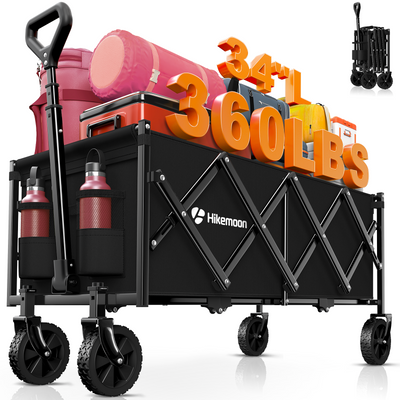
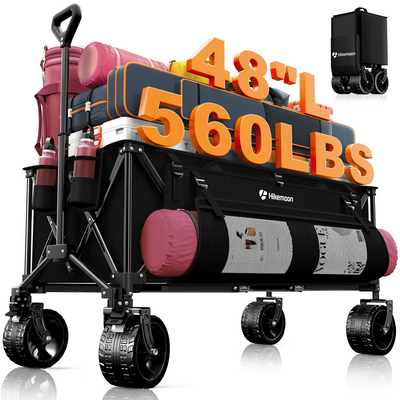
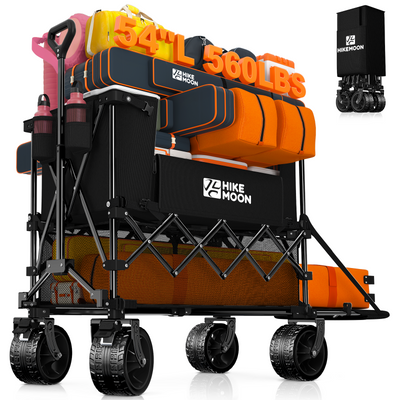
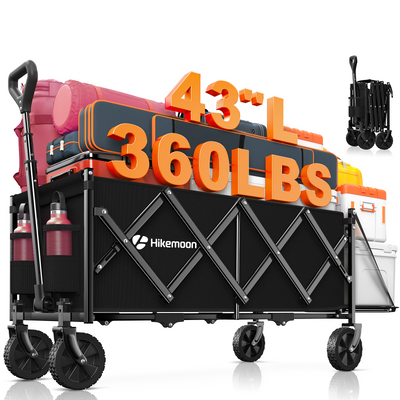
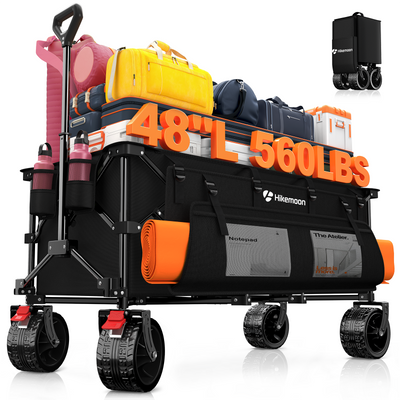

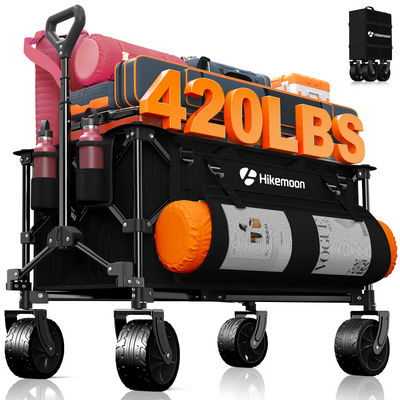

A heavy duty folding wagon should do more than hold a lot. Before buying, check what you need to carry, where you will pull it, and whether the weight capacity, wheels, frame, handle, and folded size match real large-load use.
Start With What You Need to Move
Heavy Coolers, Drinks, and Grocery Bags
When your primary goal is transporting refreshments or weekly groceries, weight adds up quickly. Liquid is exceptionally heavy, meaning a fully stocked cooler or multiple cases of water require a wagon that can handle concentrated weight without bowing.
Long Beach Chairs, Umbrellas, and Tents
Awkwardly shaped items present a spatial challenge rather than just a weight issue. If you regularly haul canopy tents or extended beach loungers, you need to look at the interior length of the cart to ensure items do not spill over the edges or tip the wagon backward.
Soil, Plants, Mulch, and Garden Tools
Yard work demands durability against sharp edges and abrasive materials. Hauling heavy bags of soil, loose rocks, or pointed tools requires a rugged interior that resists punctures and can be easily hosed down after a long day in the dirt.
Sports Gear, Camping Bins, and Outdoor Supplies
For coaches and outdoor enthusiasts, volume is everything. Bulky items like protective padding, soccer balls, sleeping bags, and plastic storage bins fill up space rapidly, requiring a deep cargo area with generous cubic feet capacity.

Check Weight Capacity Without Getting Misled
Do Not Rely on One Big Weight Number
Manufacturers often advertise a high static weight rating, which only represents how much the wagon can hold while sitting completely still on flat ground. Real usage involves movement, turns, and bumps, which place much higher stress on the components than a static number suggests.
Load Placement Affects Stability
How you arrange your items matters just as much as how much they weigh. Tossing everything into the wagon haphazardly can shift the center of gravity, making the entire cart prone to tipping over when you attempt to navigate a curb or make a sharp turn.
Keep Heavy Items Low and Centered
To ensure a smooth ride, always place your heaviest gear at the very bottom and directly over the middle of the axle area. This distribution keeps the wagon grounded, lowers the risk of tipping, and makes the handle significantly easier to control.
Dense Loads Need Strong Bottom Support
A high weight capacity means nothing if the floor of the wagon sags under pressure. When evaluating a Heavy Duty Folding Wagon, look for designs that feature solid insert boards or built-in steel crossbars underneath the fabric floor to keep the base rigid when carrying dense cargo.
Check Wheels, Brakes, and Terrain Fit
Wide Wheels for Sand and Soft Ground
Narrow wheels will sink directly into loose sand or soft mud, turning your convenient pull cart into an exhausting anchor. Wide, thick wheels distribute the weight across a larger surface area, allowing the wagon to float over tricky beach terrain.

Larger Wheels for Grass and Gravel
Trekking through uneven park grass or rocky campsite trails requires tall wheels. Larger diameters provide better ground clearance, allowing you to roll over twigs, roots, and pebbles without getting stuck or jarring your cargo.
Smooth Wheels for Pavement and Markets
If you mostly navigate paved sidewalks, concrete farmers markets, or smooth indoor floors, massive treaded wheels are unnecessary. Sleek, hard rubber or polyurethane wheels provide a quiet, effortless roll on solid surfaces without extra bulk.
Brakes for Slopes and Parking Lots
A fully loaded wagon can easily roll away on a slight incline, creating a safety hazard. Built-in wheel brakes give you peace of mind, allowing you to safely park your cart on hills, boat ramps, or asphalt parking spaces while unloading.
Check the Frame, Fabric, Handle, and Folded Size
Frame Support Under Heavy Loads
The skeleton of your wagon must endure constant twisting forces. Look for heavy-duty steel frames with reinforced joints, as a flimsy frame will flex excessively under a large load, leading to structural failure over time.
Tear-Resistant Fabric for Rough Gear
The utility fabric must withstand friction from metal edges, wood, and concrete. Double-layered materials like high-denier Oxford cloth offer the necessary durability to prevent premature fraying, tearing, or stretching at the seams.
A Stable Handle for Loaded Pulling
A weak handle makes a heavy wagon incredibly frustrating to steer. Ensure the handle connects securely to the steering axle and offers an ergonomic grip, which prevents it from dropping to the ground or snapping under heavy pulling force.
Folded Size for Car and Garage Storage
An extra-large wagon is only useful if you can actually transport it to your destination. Check the folded dimensions to guarantee it fits into your vehicle trunk alongside your gear, and fits neatly on your garage shelving when stored.

Match the Wagon to Your Main Hauling Scenario
To help you make the right choice, here is a quick breakdown of how different wagon features align with specific outdoor activities and gear requirements.
|
Scenario |
What to Check |
Best-Fit Wagon Type |
Recommended Hikemoon Product |
|
Beach days and soft sand |
Wide wheels, capacity, easy cleaning |
Heavy-duty beach wagon |
|
|
Family outings and mixed gear |
Large capacity, stable frame, easy pulling |
Extra-large folding wagon |
|
|
Long items and oversized gear |
Extra length, tailgate support, stable loading |
Folding wagon with extended tailgate |
Conclusion
The best heavy-duty folding wagon is not always the biggest one, but the one that matches your specific load type, terrain, storage space, and handling needs. Taking the time to evaluate these practical factors beforehand ensures your chosen cart will reliably manage your heaviest loads for years to come.
FAQ
Can I Use a Heavy Duty Folding Wagon for Light Errands?
Yes, these wagons are highly versatile and work perfectly fine for light tasks like moving laundry or light groceries. However, they may be heavier to lift into your car compared to smaller, lighter models.
Why Is My Folding Wagon Hard to Pull When Loaded?
This difficulty usually happens if the weight is distributed poorly or if the wheels are not suited for the terrain. Heavy items placed too far forward or wheels sinking into soft ground will significantly increase pulling resistance.
Can a Large Folding Wagon Be Hard to Store?
Some heavy-duty models can remain somewhat bulky even when collapsed. It is important to review the folded measurements to make sure the wagon fits into your specific storage spots.
Why Does a Loaded Wagon Pull to One Side?
An uneven load is the most common cause of steering misalignment. If more weight sits on one side of the cart, it creates uneven friction on the wheels, causing the wagon to drift in that direction.
Can I Leave a Folding Wagon in the Garage or Car?
You can store it there, but extreme temperature fluctuations and humidity can degrade the fabric and rust metal parts over time. Storing the wagon in a dry, protected environment extends its lifespan.
How Do I Clean a Wagon After Beach or Garden Use?
Remove any loose debris or sand first, then brush the fabric down with mild soap and warm water. Let the wagon dry completely in the open air before folding it up to prevent mold and mildew growth.
More Reading: Beach Wagon vs All-Terrain Wagon: Which One Should You Choose?